What Are the Technologies Commonly Found in the Hospitality Sector?

Indoor Positioning System has benefited many industries and the hospitality sector is one of them. As it is cost-effective and easy to install, many hotels around the globe have already started relying on it for asset tracking and other facilities. Here are some of the latest technologies that you will find in modern hotels: 

  • Automated Check-In- This is an advanced system that helps guests complete the check-in process smoothly. A fully automated check-in process is convenient for all. Guests can avoid standing in the queue at the hotel’s reception desk. They can simply collect the keys to their respective rooms from the self-service stations. Automated check-in is of great use in airports as well.
  • Smart Rooms– Smart rooms come with a variety of interesting features such as smart thermostats, digital water temperature valves and sensors, automated lighting, motorized shades and curtains, and digital food menus. 
  • Asset Tracking– Thanks to the Indoor Navigation Positioning System, asset tracking has never been easier. It can IoT-based hotel that is equipped with asset tracking technologies, and the service staff can track objects like cleaning carts and luggage racks. Thanks to real-time monitoring, hotels can now streamline housekeeping tasks. 
  • Smart Locks– Just like a Heart Rate Monitoring Smart Watch helps people monitor their heart rate, smart locks improve safety. Guests can simply use an app as their room keys. So, this replaces the need for a traditional key card. Integrated security devices can be connected together and programmed as per various protocols. For instance, if there is a security threat, the device will instantly trigger door locks, emergency lighting, and audio alerts. 

Wrapping Up 

In the coming years, many more IoT trends will emerge in the hospitality sector. IoT is growing at a fast pace, and it is opening novel paths for hotels.

How Can Your Smart Watch Keep Your Heart Healthy?

Ever since their introduction, smartwatches have never stopped evolving. Earlier they were considered fashion accessories. But today, your smart watch can be the best friend of your health. From recording your sleep duration to tracking the number of steps you take daily; smartwatches can perform a range of functions. You can also wear a Heart Rate Monitoring Smart Watch and keep heart ailments like strokes at bay.

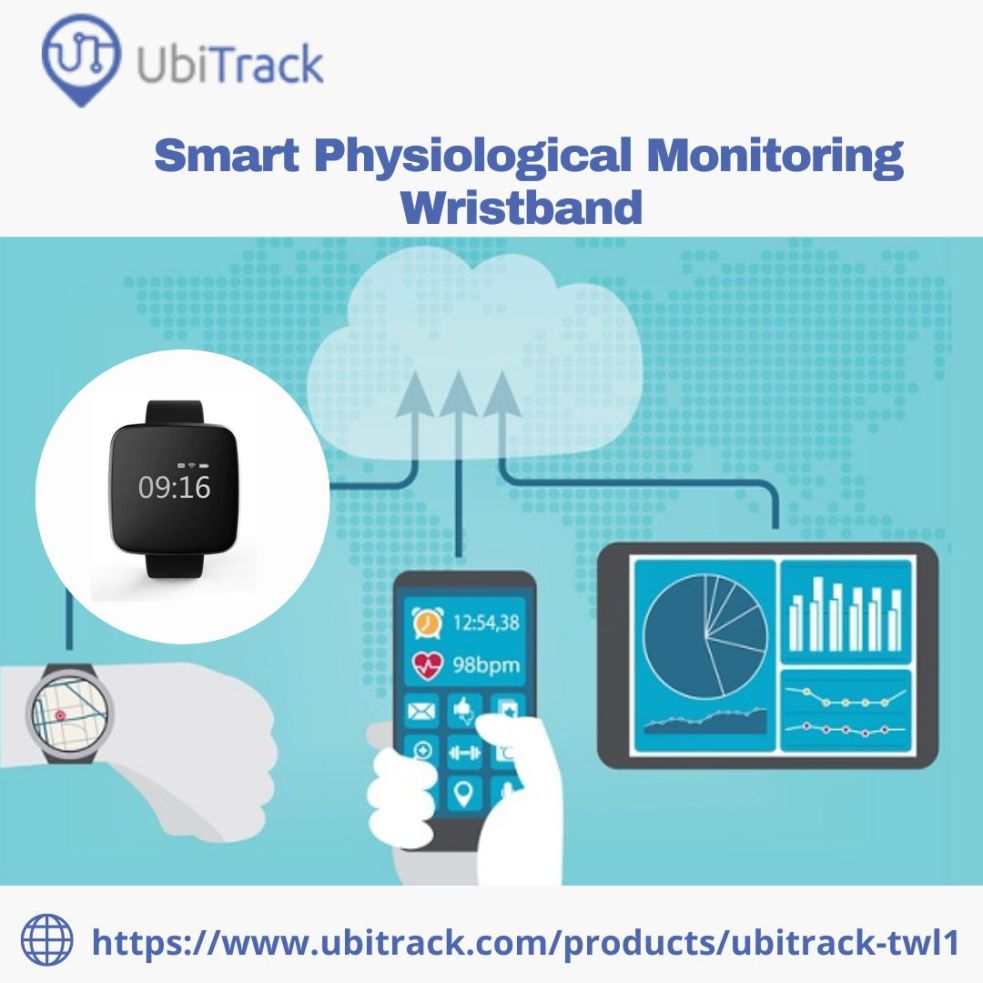
Heart rate monitoring with the help of smartwatches has become a common practice these days. The purpose of this technology is to help people monitor their heart health so that several cardiovascular diseases can be prevented. Modern Heart Rate Monitor Wristband comes with a wide range of heart-rate tracking features. From monitoring your heartbeat all day to alerting you whenever the heart rate spikes up unexpectedly, a smartwatch makes it easy for you to look after your heart. 

Wearable devices that have the heart rate calculating feature are used for promoting fitness and health. For instance, if you are working out at the gym, it will track your heart rate and get an accurate result. Even if many people have the misconception that these devices are meant for athletes, anyone can benefit from a heart rate measuring wearable. Just like RFID Positioning System tracks people and objects with the help of radio frequency, an IoT-based smartwatch is a kind of medical wearable that provides patients the information they require for achieving desired health outcomes. 

To Sum Up 

So, wearing a smartwatch that accurately captures your heartbeat makes sense. As it displays a person’s heart rate in real-time, it is possible to seek medical help and save a person’s life.  In addition, you can also be mindful of an ergonomic monitor position when you are at work to shield your body from several conditions like posture problems.

Know Everything About Indoor Positioning with the Help of Ultra-Wideband

In industrial environments, indoor tracking often needs extremely precise localization. So, industries need solutions that are based on UWB, a short-range radio technology. Even if it doesn’t work with Bluetooth, Wi-Fi, and other consumer standards, UWB Outdoor Positioning and indoor positioning offer remarkable accuracy.

The Functionality of Indoor Positioning with Ultra-Wideband Technology 

Ultra-wideband is of great use in indoor positioning. As opposed to Wi-Fi and Bluetooth Low Energy, positioning in UWB is done mainly with transit time technique instead of measuring signal strengths. This method is capable of measuring the running time light takes to reach from one object to several servers. So, multiple receivers are required for the exact localization of any item. In addition, the line of sight between the transmitter and the receiver must be direct.

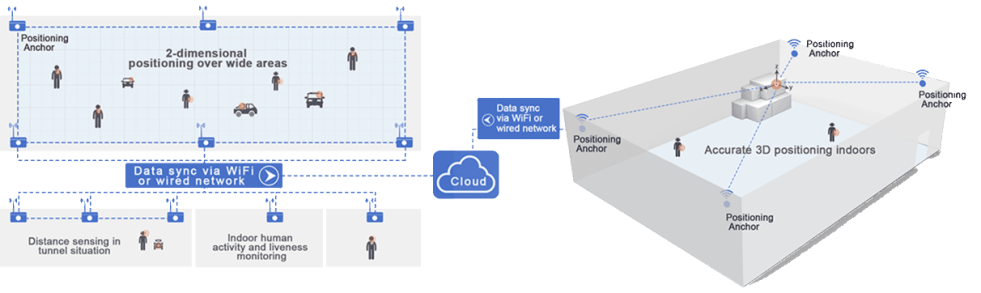
UWB, as a wireless positioning system technology, is ideal for both server-based positioning and client-based positioning. While indoor navigation is a type of client-based positioning, asset tracking is an instance of server-based positioning. The basic difference between client-based and server-based positioning is that the former enables the determination of the position on a mobile phone. In infrastructure-based positioning, the calculation of positions is reflected on a server.

· Server-based Localization

Ultra-wideband can easily track an object that is fixed in its place. BLE positioning or any other sensor technology can detect the movement phases. This type of Physiological Monitoring Equipment is immensely useful in various industrial environments.

· Client-based Localization

Other than BLE (Bluetooth Low Energy), you can also use Ultra-wideband as a tool for client-based positioning on smart phones. It is known for its high-precision positioning along with low latency.

Wrapping Up

The bottom line is to remember that UWB can deliver fast and amazingly intact positioning. So, with this smart indoor navigation system, you can get ahead of your business rivals.

Physiological Monitoring Technology and its Benefits on the Health Sector

In recent years, social and economic growth around the globe has threatened people’s health in various ways. Cardiovascular diseases, for instance, continue to increase globally and there are several challenges that the medical system is yet to overcome. As medical expenses continue to increase, affording quality treatment is the biggest concern of many families. From the perspective of harmful and highly hidden diseases like heart ailments, health monitoring is a must to reduce health risks.

Physiological Monitoring Equipment has facilitated the health industry immensely by reducing the burden on existing medical systems. This is the reason why the Internet of Things has become an essential technology in the health sector. With technological advancements, the expense of health monitoring decreases, and more people are interested in purchasing wearable devices. Psychological monitoring systems rely on multiple sensors to collect bodily data and they have emerged as a reliable tool to monitor health effectively.

What Makes Wearable Devices Popular as Health Monitoring Equipment?

In addition to being affordable, wearable devices are also portable. Wearable psychological monitoring systems come with a wristband charging cable and they perform an excellent job of measuring vital signs like heart rate, body temperature, blood pressure, and even activity patterns.

With the help of WiFi technology, the device can successfully integrate temperature sensors, ECG signal sensors, and also motion sensors. So, it can perform accurate and real-time monitoring of the body temperature., ECG is the movement acceleration of the wearer. So, they play a significant role in providing long-term monitoring of health conditions.

Wrapping Up

A psychological monitoring system uses multiple sensors and has immense possibilities. The system is capable of monitoring different types of psychological signals and can display those signals in real-time. Smart Heart Rate Monitor Wristband is a fantastic example of a psychological monitoring system.

A Little More About the GPS Indoor Positioning System from UbiTrack

Introduction 

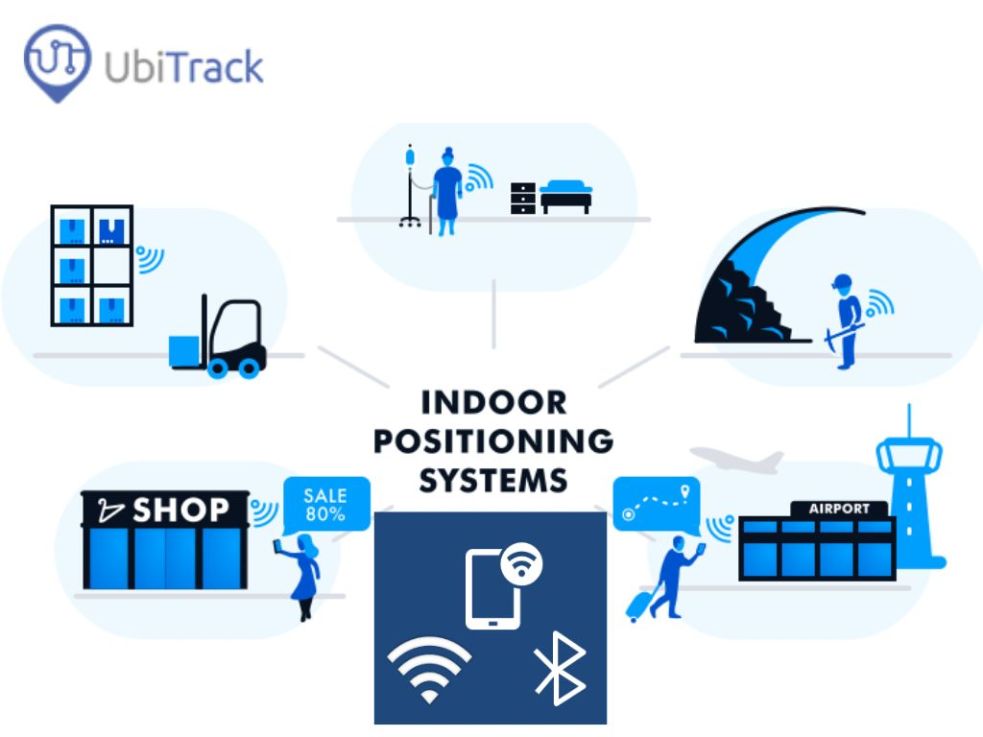
The best way to describe indoor positioning systems (IPS) is as a GPS for indoor areas. Using cellphones, mobile devices, tracking tags, or other devices, an indoor positioning system enables users to precisely determine the location of people or objects inside a structure.

How Does It Function?

IPS technology detects and tracks information about a device’s location using a range of sensors. This can be done either with radio frequency sensors installed throughout an indoor environment or with internal sensors and radio receivers in smartphones and other IoT wearable devices. The positioning system uses location information to produce precise coordinates that are shown on an indoor map. 

Can a GPS Module Be Used Inside?

GPS cannot be used indoors for two main reasons: poor signal quality and poor accuracy. The GPS signal is weak when it leaves the satellite and becomes significantly weaker when it travels a long way to reach the GPS receiver, barely strong enough to be functional. 

What Indoor Location System Is the Most Precise?

The most precise Bluetooth-based proximity solution in the world is called UbiTrack. Depending on the amount of accuracy necessary, it can be set up to find objects or people in a broad region or down to a very precise position by utilizing a variety of proximity readers and reference points. 

What Purposes Do Indoor Positioning Systems Serve?

A network of devices known as a GPS indoor positioning system (IPS) is used to identify people or items in environments where GPS and other satellite technologies are less accurate or completely ineffective, such as multistory buildings, airports, alleys, parking garages, and underground places. 

The Importance of Indoor Positioning Systems

Applications that employ the movement of moving objects or people indoors can use IPS in a wide range of ways. This information can be used by intelligent buildings, such as hospitals, factories, or warehouses, to increase security, and efficiency, and automate activities.

All About Real-Time Location Solutions (RTLS) That You Need to Know –

What exactly is a Real-Time Location System (RTLS)?

Real-time location systems (RTLS) allow you to digitally track the location and movement of physical objects in big indoor facilities. As a type of indoor positioning system, RTLS primarily uses radio-frequency (RF) technologies such as UWB, BLE, and Chirp, as well as wireless devices such as tracking tags and smart phones, in conjunction with other integrated components, to continuously determine the position of people and objects in areas where GPS cannot reach. This provides actionable location data that may be utilized to display critical individuals, assets, vital equipment, and more on a live, indoor map or linked into automated processes and systems such as IoT-enabled safety apps, asset & supply chain management solutions, and more.

RLTS Variations-

There are mainly two types of RTLS that are used:

· RTLS with high precision

The position of the monitored object or person is identified to the specific place. This necessitates more sensitive gear, which is also more expensive. This is useful in use situations such as inventory management.

· RTLS based on proximity

The position of the monitored object or person is tracked to the accuracy of a few square feet or inside a zone of this kind. These technologies have the advantage of being less expensive to install.

How Reliable Are Real-Time Positioning Systems?

The accuracy of real-time location systems varies significantly depending on the underlying RF technology and positioning algorithms used by each system. A standard like UWB may give high location accuracy between 10-50 cm using time-of-arrival-based position estimates for applications that demand a high degree of precision.

If you are looking for RTLS Solutions, Bluetooth Indoor Positioning, Indoor Positioning Sensor or any other kind of indoor positioning and tracking systems, reach out to UbiTrack. UbiTrack is a multi-dimensional indoor locating system with excellent accuracy, versatility, and cheap cost. Real-time location, tracking replay, high-speed camera connection, precise facial recognition, electronic fence alarm, and other features are available through the system.

How Positioning System Analytics Helps Your Business?

The technique of detecting the location of people or assets in an interior environment using wireless sensors is known as indoor positioning. Typically, the idea also relates to analyzing the location of the data in order to benefit the identified individual or business. Indoor positioning may be accomplished using a number of management and wireless technologies like Wireless Indoor Positioning, RFID Positioning System and so on. In recent years, IPS has gained traction as a security solution in a variety of industries, including healthcare, energy, and education sector.

What are the most popular indoor positioning technologies?

Each of the several wireless technologies used in IPS today has advantages and disadvantages. The following are some of the most popular indoor positioning technologies today:

· Radio Frequency Identification (RFID)

RFID is one of the most well-known IPS standards. RFID may be utilized for RFID Positioning System in both active and passive modes. Active transmitters are battery-powered and can track your whereabouts in real time at a distance. Passive transmitters are completely powerless. When they’re close enough, they’ll bounce a signal back to receivers.

· Wi-Fi

The wireless indoor positioning system operates by specifying coordinates with Wi-Fi access points capable of transmitting certain data. Using the multilateration technique and the RSSI (received signal strength indicator) and MAC-address, the system may pinpoint the exact position of the user’s device. The precision of Wi-Fi locating is determined by the number of access points, the building’s layout, and the type of smart phone used.

· Ultra-wideband(UWB)

Indoor location tracking is quite accurate with UWB. Tracking devices use tags throughout their coverage area to bounce a high-frequency radio signal. Signals flow through building materials with centimeter-level precision and return to the beacons. That accuracy, though, comes at a cost. Ultra-wideband wireless systems are costly and consume a lot of power. This standard is appropriate for high-risk applications where additional tracking expenses are acceptable.

How Positioning System Analytics helps your business?

Business managers may receive analytical data about their organizations from the indoor positioning technology platforms. This includes extensive information on clients, their interactions and their points of interest. You may obtain a deeper grasp of what your clients want and use this information to your advantage.

Some of the key benefits are-

· Incorporating indoor navigation in retail outlets and shopping malls may benefit both businesses and customers. Using this approach, businesses may direct clients directly to the things they need. You may even use geo-location within a mall to tell customers about a promotion or deal when they are nearby.

· Significant factories currently require a large number of workers and supervisors to keep things operating properly. With the introduction of real-time monitoring software, these firms will be able to follow the movement of all their employees and assets, making the entire process faster and smoother.

If you are looking for efficient Wireless Indoor Positioning systems for your business you can reach out to UbiTrack’s Wireless Indoor Positioning, VM Hardware Version and RFID Positioning System solutions. UbiTrack is a multi-dimensional indoor positioning system with excellent accuracy and versatility. Real-time location, tracking replay, high-speed camera connection, precise facial recognition, electronic fence alarm, and other features are available through the system.

All You Need To Know About Indoor Positioning Systems and Heart Rate Monitoring Smart Watch

Indoor positioning allows for quick and precise placement indoors. It encompasses a wide range of location technologies, including Bluetooth, Wi-Fi networks, sensors, and visual clues. This aids in the proper location of resources, transportation, and devices, irrespective of which level they are on.

Why do you need an Indoor Positioning System?

Indoor positioning systems allow you to find out where things or people are in a building. Because GPS is unreliable in inside environments due to the lack of visible contact with GPS satellites, an indoor positioning system relies on alternate means of the location. These include ubiquitous commercial protocols such as Wi-Fi and Bluetooth Low Energy, as well as Ultra-wideband and passive RFID alternatives. Both indoor and outdoor use is possible with the latest devices. The adoption of the positioning technique and expertise is the first and most essential stage in the deployment of locating systems.  

Features of Indoor Navigation Positioning System:

  • Immersive experience

To be able to find the structure, we must first generate a very precise map of it.

  • Using a self-service model

Based on the specified recommendations, you may install your devices however and wherever you like.

  • Working offline

Pinpoint devices and assets without a network connection and navigate to the correct location within a facility, whether it’s a parking place, a mall store, or a hotel room.

  • Make money with your data.

You can choose to publish your indoor map on the app’s Marketplace and give it to chosen third-party users.

All you need to know about Heart Rate Monitoring Smart Watch

heart monitor is a useful feature on many smartwatches. You may wish to monitor your heart rate on a regular basis for a variety of purposes; including increasing sports performance, stress management, and monitoring your heart health.

Features of a Good Heart Rate Monitoring Smart Watch includes:

  • Keep track of your maximum oxygen consumption.
  • Keep an eye on your running intensity.
  • Keep track of your swimming workouts.
  • Provide coaching advice
  • GPS tracking is available.

UbiTrack with excellent precision, flexibility, and cheap cost and has been delivering indoor monitoring, usage analysis, and sensor assessment solutions for people and assets.

Smart Monitoring Equipments – Advantages and Real-life Implementations

Wireless Indoor Positioning-

By utilising the (IoT) and pervasive connectivity, Wireless Indoor Positioning for establishing precise wireless indoor location information has become very crucial for satisfying increasing demands for location-based services. The indoor environment affects most Wi-Fi-based indoor location approaches that use wireless received signal strength (RSS)-based methodologies, which rely on signals from at least three reference access points.

The wireless indoor positioning system operates by utilising Wi-Fi access points that may transfer data to define coordinates. Using the multi alteration technique and the RSSI (received signal strength indicator) and MAC-address, the system may pinpoint the exact position of the user’s device. Wi-Fi positioning accuracy is determined by the number of access points, building topology, and kind of device is in use. Modern Android devices may be able to provide indoor positioning as accurate as 2 to 3 metres.

UWB Outdoor Positioning-

UWB Outdoor Positioning systems can pinpoint locations within 20 cm or less in real-time. Signals with a wide range of frequencies can be monitored properly in terms of the time it takes for an encoded signal to journey from a transmitter to a receiver because the capacity to precisely measure the “time of flight” of any radio wave is a function of bandwidth. The usage of a wide-frequency spectrum allows for a short transmission length. The signal is sent at a low power level with UWB, preventing interference with other radio systems such as cell phones and police radios.

Warehouse automation is one of the applications where the location accuracy of a UWB positioning system is clearly advantageous. Amazon has massive warehouses loaded with hundreds of thousands, if not millions, of different things; profitability rests on controlling labour expenses, which includes providing personnel with a mechanism to rapidly discover items when they are ordered by customers.

All of the different objects in a large warehouse may be simply mapped using UWB Outdoor Positioning systems. As items are scanned into stock by workers, scanners fitted with location tags communicate information about their location. The positions of things in three dimensions are recorded so that they can be quickly recovered to fulfil consumer orders.

IoT Based Physiological Monitoring Equipment

Internet of Things (IoT)-based physiological monitoring devices could be extremely valuable for patients during the present pandemic situation. This research provides an IoT-based system for real-time health monitoring that uses the patients’ observed body temperature, pulse rate, and oxygen saturation, which are the most crucial metrics for critical care. The observed temperature, heart rate, and oxygen saturation level are displayed on a liquid crystal display (LCD), which can be readily synchronised with a mobile application for rapid access. The suggested IoT-based technique was tested and verified on five human test participants using an Arduino Uno-based device.

The system’s results were promising: the data acquired from the system are saved relatively quickly. When compared to other commercially available devices, the system’s results were confirmed to be accurate. During the COVID-19 epidemic, IoT-based gadgets could be extremely useful in saving people’s lives. For more updates visit here – https://www.ubitrack.com/

Indoor Positioning System – The Demand for Latest Automated Version Is Up High

It is time to increase production or develop employee efficiency for a fast-growing process. Buy the latest Indoor Positioning System Bluetooth device. You can now control the operation and in-house management without any hassle. New-age technology-adapted indoor positioning system shows efficient results with more perfection. That is why the craze for such goods is increasing day by day. It will bring effectiveness with more accuracy than you can expect. 

A business brand or a goods manufacturing house deals with vast employees. Now, you need not think much about employee regulation and product monitoring. A new-age indoor positioning system will let you know what is happening inside the production house. And for so, nowhere you need to go. Maintaining each department is not easy-going for the higher authorities. But you can do it conveniently for sure hereafter.

You must be thinking, how can you get the updates of employees by sitting in one place? The indoor positioning system comes with design and performance specifications that let you know every in-house detail. Get the tag or buy the wristband and Wristband Charging Cable from a reputed online store. It will be profitable and fast-resulting. The hi-tech device helps you navigate the business process with more exactness of work.  

Indoor Positioning System-Buy It Carefully

Modern-age technology is everything to make life much more comfortable and convenient. But how to buy the goods and keep pocket healthy yet production-worthy? Just give your glimpse down:

· Always select top-listed online companies.

· Compare the products, services, and prices. 

· Read terms and conditions and testimonials. 

· Get the market status of different companies. 

UbiTrack is the best online shop that you can go to for buying indoor positioning systems and complementary equipment. This well-famed company offers high-end UWB Anchors for Indoor placement at a much lower cost than others. So, contact this company and buy the product now.