Integrating High-Accuracy Location Tracking with Smart Heart Rate Wristbands

Today’s fast-changing technology requires personal health monitoring devices to promote health and fitness management. Combining high-accuracy location monitoring with intelligent heart rate monitor wristbands is groundbreaking. This convergence provides customers with unmatched safety features and health data to improve wellness habits.

The Evolution of Personal Health Monitoring Devices

Over the last several decades, personal health monitoring technology has advanced. These gadgets initially measured heart rate and steps as independent instruments. These gadgets’ capabilities increased with technology. Smart wristbands can measure heart rate and use GPS to determine accurate positions. These gadgets are essential for casual fitness enthusiasts and elite athletes due to their comprehensive health and physical activity perspective.

High-Accuracy Location Tracking: A Game Changer

The addition of a High Accuracy Location Tracking System to health equipment is revolutionary. Running, cycling, and outdoor enthusiasts use GPS-enabled bracelets to monitor their movements precisely. This lets users accurately examine their routes, speed, and elevation changes. Real-time location data from these devices may provide family members and caregivers peace of mind that support is always available for people with health issues or elder care.

Smart Heart Rate Wristbands: Beyond Just Pulse Monitoring

Modern heart rate monitor wristband do much more than measure pulse rates. They use modern sensors and algorithms to measure stress, sleep quality, and heart rate variability. With high-accuracy GPS tracking, these Smart Heart Rate wristbands can connect heart rate variations with particular places or activities, revealing how diverse surroundings impact physiological responses.

Safety and Security Features

Integrating GPS with heart rate monitoring improves safety. The gadget may notify emergency contacts of a user’s location if their heart rate rises or falls below a specified threshold. Geofencing can alert caretakers if the user leaves a safe area, essential for cognitively impaired patients.

Data-Driven Health Insights

The fusion of location and health monitoring also paves the way for more data-driven insights into personal health. For example, users can discover how their bodies react to climates, altitudes, or urban versus rural environments. This data can be invaluable for customizing exercise plans or managing conditions like asthma, where environmental factors play a significant role.

Conclusion

Combining high-accuracy location monitoring and intelligent heart rate monitor bracelets advances personal health technologies. As these devices grow more advanced and networked, they provide information and tools to empower people to manage their health and safety. This technology can improve public health monitoring, emergency management, and individual health objectives. As we adopt new technologies, we must combine ethical concerns with technical advances to maximize advantages while protecting user privacy and data integrity.

Future Navigation: Indoor Navigation Positioning Systems and Health Tech

Innovation in technology is virtually limitless. This is especially true of health technology like smartwatches with heart-rate monitoring and indoor navigation positioning system. Once separate fields, these technologies are now combining to create cutting-edge applications that improve our daily lives in ways we never thought possible. 

Indoor Navigation Positioning System: A New Perspective on Space Use

GPS technology has historically served as the mainstay of outdoor navigation. Indoor Navigation Positioning Systems emerged as a result of their limitations indoors.  Wi-Fi, Bluetooth beacons, and sometimes augmented reality are used to provide accurate building location information. INPS technology revolutionizes navigation in large complexes like airports, shopping centers, and hospitals. INPS improves space utilization and user experience with real-time positioning data.

Wearable Smartwatches with Heart Rate Monitoring: a Health Technology Breakthrough

The development of the heart rate monitoring smart watch is a significant breakthrough in medical technology. These gadgets measure heart rate continuously, giving useful information that can be used, among other things, to track fitness or identify possible health problems early on since they can now monitor their heart rate while on the go, people are better prepared to pursue their fitness and health goals actively.

Interior Positioning System: Integrating Health Technology

The real excitement lies in the interaction of indoor positioning systems with wearable health technology, such as heart rate monitoring smartwatches. Imagine entering a gym that has an INPS. Along with directing you to a machine when one becomes available, your smartwatch modifies your workout according to your heart rate at that moment and historical performance data that is recorded and evaluated over time. By tracking heart rates and instantly alerting medical personnel to a patient’s precise location when assistance is needed, this technology can improve patient care in hospitals.

Conclusion

The combination of wearables and indoor positioning system is opening up new possibilities for applications that promise to improve both our health and how we interact with physical spaces. This convergence is about more than just technology; it is about making the world more responsive and connected, where technology improves our quality of life and daily existence. The possibilities are endless as these technologies develop and merge further, pointing to a time when health monitoring and navigation will work together seamlessly.

Know About the Different Types of Indoor Tracking and Positioning Technology!

Indoor positioning and tracking systems are highly effective technology that has a huge range of applications. They use the network in which receivers and transmitters work to provide a detailed picture of the movement of your assets and people in your facility. You can get real-time updates by using these devices. There are several kinds of positioning devices that you can get in the market. However, some people don’t know about the different options that you have in indoor positioning sensor so take a look.

Wifi-based systems!

These positioning and tracking systems use the same kind of system just like the wireless internet service. They work by tracking the ID number which is also known as the MAC address of every connected device. These devices have a range of around 150 meters which is more compared to most IPS systems. You can get all the updates through the internet without any issues from any place you want with RTLS Solutions.

Bluetooth system!

These kinds of positioning devices use short-range wireless technology. It is a commonly used technology that is used for pairing electronic devices like connecting headphones to smartphones. The Bluetooth positioning systems have a short range that is about 25 meters but it can be very accurate in 3 meters of range. The Warehouse Stock Monitoring Device is very useful in the areas where you already have Bluetooth-enabled assets.

Ultra-wideband IPS!

The non-removable tracking bracelet makes use of higher radio frequency compared to the wifi and Bluetooth devices. These positioning devices are best to use in the workplace which is crowded with materials that are disrupting the lower frequency such as thick walls and metal-related things. It is highly accurate and can easily locate the assets. The range of these devices is higher than the wifi and accurate too.

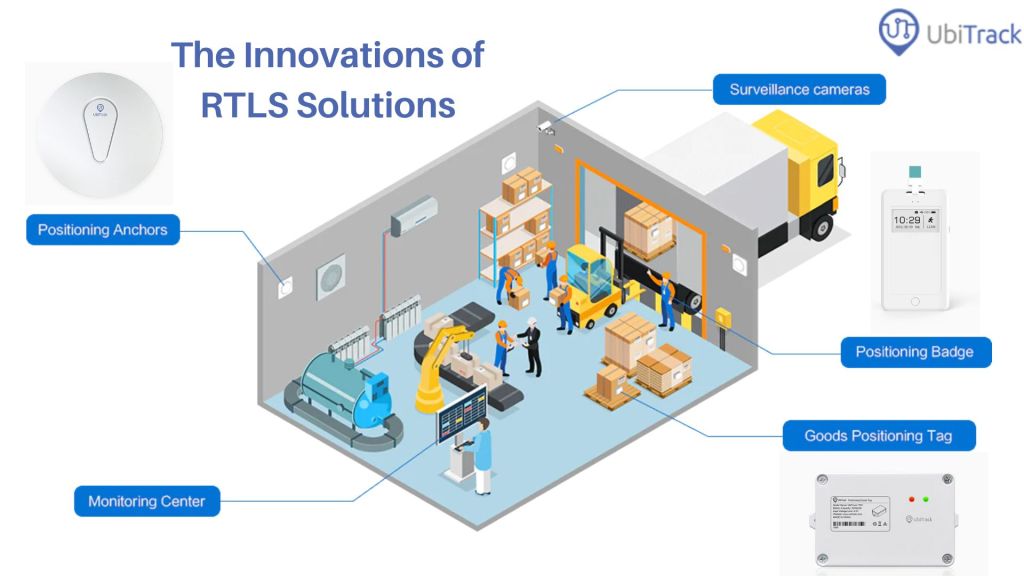
Next-Level Tracking: Exploring the Innovations of RTLS Solutions

Real-time location systems (RTLS) offer real-time tracking capabilities. We will delve into the fascinating advancements of RTLS solutions in this blog and examine how they are revolutionizing numerous industries.

1. Healthcare Sector: Saving Lives with Enhanced Patient Care

Healthcare facilities are leveraging RTLS technology to improve patient care and operational efficiency. RTLS-enabled tracking of medical equipment ensures their availability when needed, reducing downtime and minimizing delays in critical procedures. 

2. Warehouse and Logistics: Boosting Efficiency in Supply Chain Management

The logistics sector is being revolutionized by Ergonomic Monitor Position. And provide real-time visibility into the whereabouts of equipment. Businesses may enhance inventory control, reduce picking mistakes, and simplify logistical procedures. This level of tracking precision will eventually lead to a quicker order fulfillment procedure and cheaper operational costs.

3. Manufacturing Sector: Optimizing Production Processes

Downtime and inefficiencies are significant losses in industries. RTLS solutions play a vital role in optimizing production processes by tracking the movement of materials and monitoring machine performance. 

4. Education Safety: 

Security and safety are major priorities for education sectors. Indoor positioning sensor is increasingly being utilized to track students in real-time to increase safety. The establishment of a secure learning environment, monitoring access to restricted areas, and preventing illegal entry are further benefits of RTLS technology.

Conclusion

RTLS solutions have proven to be a transformative technology across many industries. As it brings efficiency, precision, and enhanced experiences to the forefront. The potential of indoor positioning system provides new possibilities for a variety of industries.

How to Track Location with Indoor Position Tracking System?

Everyone knows how to use GPS (Global Positioning System) which determines the position of an object/ person with the help of satellite signals. But have you heard of Indoor Position Tracking System? Just like a GPS works in outdoor spaces, IPS helps locate objects and people indoors. IPS technologies offer a range of location-based tracking solutions such as wayfinding, RTLS (real-time location system), inventory management, etc. 

Indoor Tracking Technology: Main Types

  • Proximity-based Systems- These systems are capable of detecting the general location of an object or person at room level, but cannot pinpoint the precise location. 
  • Ultra Wide-Band Systems- A cool technology, UWB is quite popular as signals are wide and offer reliable accuracy. 
  • Wifi-based Systems- In WiFi-based systems, WiFi transmitters send signals to multiple access points which use algorithms for computing position and then sending it to the cloud. 
  • Infrared Systems (IR)- Infrared-based localization systems for indoor environments take the help of infrared light pulses for locating signals inside any building. 
  • Acoustic Systems- This type of indoor tracking system uses ultrasonic pulses for locating things in an indoor environment. 

Why Invest in a Good Quality Bluetooth Indoor Positioning System? 

The Bluetooth indoor positioning system offers the following advantages:

1. It is highly secure and tracks effectively.

2. The wristband charging cable makes it easy to charge the portable device and also offers remote access. 

3. These are user-friendly, making them easy for all to navigate.

4. When used in places like malls and hospitals, they ensure the safety of employees and increase their productivity. 

Indoor Positioning System Bluetooth relies on BLE (Bluetooth Low Energy) beacons that can be mounted on objects, walls, or ceilings. They emit radio signals at frequent intervals which help devices calculate the distance. This advanced wayfinding technology gives visitors the convenience to navigate their path inside big buildings like malls, airports, and hospitals.  

What is Indoor Positioning System and What are Its Features?

Indoor Positioning System simply referred to as IPS is an advanced technology feature that allows you to track your goods or products inside your home or warehouse. Just like a Global Positioning System (GPS), an Indoor Positioning system helps you keep track. The only difference is that a GPS doesn’t work indoors while Indoor Positioning System can keep a track of indoor goods as well.

With advancements in technology, navigation has evolved to a whole new level. One can keep a track of goods and products using UWB Indoor Positioning System

Types of Indoor Positioning Systems

There are many types of Indoor Positioning Systems. Various methods use various technologies that help you track your goods. Some of the most famous and reliable systems include Wi-Fi Based Systems, Proximity Based Systems, Acoustic Systems, Infrared Systems, ULTRA Wide Band Systems, and many more.

In this blog, we will dig into the features of an Ultra-Wide Band (UWB) Indoor Positioning System.

UWB and its Features

The ultra-Wide Band positioning system is one of the most widely used navigation cum tracking systems. Ultra-wideband tags are attached to the goods while a UWB reader transmits a wide-frequency pulse. The tags detect the pulse and generate a code that helps with tracking.

Features of UWB:

-Top-notch security which prevents cyber attacks

-Low energy consumption

-Highest accuracy among all Indoor Positioning Systems

-High-speed and frequent updates

Application of UWB:

-Product tracking in a warehouse

-Mobile payments

-Virtual Reality (VR)

Ultra Wide Band Indoor Positioning System is the most reliable and secure Indoor Positioning System which has been extensively used in various fields such as healthcare, business, warehouses, and much more.  

Unified Positioning from Outside to Inside with UbiTrack

Using the GPS on your phone to pinpoint your precise location while moving around outside is simple. The GPS signals, however, are too faint to be useful indoors. Fortunately, the expert’s creative physiological monitoring equipment monitoring can be solved in several different ways. Users can monitor their pulse, heart rate, breathing rate, perspiration rate, body temperature, core body temperature, and other vital signs using cutting-edge technology and medical-grade hardware. It creates a straightforward, user-friendly product by fusing the newest technology with a user-friendly design.

The Benefits of Physiological Monitoring Equipment

An app is used to connect the physiological monitoring equipment to a PC, tablet, or smartphone. The tools can be used for a range of life and health tracking applications.

High Accuracy

Customers looking for extremely precise, quick, and accurate positioning in an outdoor environment will find the ideal solution in the UWB Outdoor Positioning System. The UWB Outdoor Positioning System is a tool for managing field personnel and tracking assets. It is an effective tool for monitoring zone boundaries as well as asset locating and tracking.

A distinctive, high-power, broadband positioning system with an accuracy of at least 5 cm is the UWB Outdoor Positioning System (accuracy can be better). With GNSS users may swap out unsightly wires for a reliable and durable passive option, like an antenna. The base station, an extra receiver, and a power amplifier that is connected to the antenna are the three components of the system.

Seamless Positioning from Outside to Inside.

UbiTrack offers a blue-dot experience with a seamless transition from outdoor to indoor navigation regardless of the positioning service you use. To make sure you’re walking the right way, the blue dot refreshes as you move along the path.

UWB Positioning System

A multi-dimensional integrated indoor positioning system with great precision, adaptability, and affordability are called UbiTrack.

The system provides access to features including accurate facial recognition, high-speed camera connection, real-time positioning, tracking playback, electronic fence alert, and more. There are only four stages involved in configuration and deployment. These include setting up the positioning tags, uploading the floor plan, deploying the positioning anchors, and configuring the software and wireless indoor positioning.

How Accurately UWB Positioning System Performs?

In recent years, technology has advanced to the point where it is now commonly found in homes. Using traditional Wi-fi connections in a home’s basement, garage, or other indoor location has become inefficient and unreliable. By switching to a UWB indoor positioning system, users can connect anywhere in their homes using faster speeds and enhanced connectivity. In this system, the base station sends a signal in a straight line from the access point to the client. This limits the speed and range of a Wi- fi signal. On the other hand, UWB uses a 3D frequency BSS (Backward Sweep System) based on user location. The user’s device communicates with a base station using an omnidirectional antenna that sends signals in all directions simultaneously. The signals then converge at the base station, making it easier for devices to connect and establish a stable connection. This limits the number of indoor locations that can benefit from a UWB system but makes indoor connectivity much more reliable and faster than traditional Wi- fi systems provide.

Subsystems of a UWB Positioning System Include:

User location-

To determine where a device is located, an onboard processor on each device uses triangulation methods to determine its position based on Wi- fi network signals from nearby access points. It helps in accurate heart rate monitor watch in several places.

Base Station Localization-

To find its nearest base station, each device periodically measures its distance from each base station and computes its position based on this data using triangulation methods again with help from nearby Wi- fi network signals. Next, it determines which base stations are closest to their current location by measuring their distance again using similar methods as above with help from its signal strengths against user location data provided by subsystem 1.

A  UWB indoor positioning system can improve indoor connectivity by overcoming the limitations of traditional Wi-Fi systems such as speed and range indoors. It also reduces interference caused by multiple devices connecting at once at outdoor locations such as cafes and public spaces. As such, this technology will continue to become more popular as outdoor limitations increase due to the increased use of electronic devices.

Indoor Positioning Systems and the Industries They Benefit –

Indoor positioning systems are made up of a network of linked devices that work together to provide location tracking services for people and assets that cannot be tracked using traditional technologies like GPS or satellite. GPS and satellite systems for Indoor Navigation Positioning systems are constrained by a lack of precision and/or the capacity of their signals to reach their intended location. Businesses will turn to indoor positioning systems to acquire functional insights about the movement of people and equipment within the workplace when GPS and satellite positioning systems fail or do not give precise enough data.

What Industries Can Benefit from Indoor Positioning Systems?

Many sectors use indoor positioning systems to improve the efficiency of tracking assets, employees, forklifts, maintenance, processes, and yard management, while also enhancing safety related to lone workers, roll-call, pandemic workplace practices, and forklift operations.

· Manufacturing

Location tracking systems are used in production contexts to promote occupational safety and optimize the use of equipment and employees.

· Healthcare

Indoor positioning systems and heart rate monitoring smartwatches are used in the healthcare business to secure assets and offer continuous patient medical status. 

· Construction

Indoor positioning systems perform admirably on both underground and above-ground building sites. They can be used to generate detailed information on asset usage and mobility on the job site during working hours.

· Mining

The mining, oil, and gas industries must adhere to stringent safety laws while still meeting industrial standards. Indoor positioning systems enable managers in various businesses to acquire significant insight about their equipment and people based on location data by monitoring the flow of goods, cycle times, travels, and other vital statistics.

Indoor positioning systems and indoor location monitoring are accomplished using a variety of ways, each of which varies in efficiency and cost based on the location tracking requirements. UbiTrack, thankfully, is making very accurate indoor location monitoring more practical and economical, particularly for ultra wide-band (UWB) systems.

Indoor Location Tracking is Now Easy With Positioning System

UbiTrack has wireless indoor positioning equipment that tracks your location with one simple device. The new way to use sensors and the internet to create a personal map of the places you’ve been. And it’s easy for anyone to do. It is a high-performance, wireless indoor positioning solution. It enables accurate and anonymous indoor positioning of people and objects within buildings or even between buildings. This allows you to track movement in challenging environments like offices and hospitals or tag visitors for targeted advertising. The system is intended for building owners, architects, engineers, and designers looking to deliver a presence through the use of computerized interactive displays in public spaces.

How is it User-friendly?

We are the world’s most advanced and innovative wearable physiological monitoring equipment. Utilizing new technologies and medical-grade hardware, enables users to track their pulse, heart rate, respiratory rate, perspiration rate, body temperature, core body temperature, and more. It combines the latest in technology with user-friendly design, resulting in a simple and intuitive product.

The wearable physiological monitoring equipment connects to the smartphone, tablet, or PC via an app. The equipment can be utilized for a variety of health and life-tracking applications.

Highly Accurate: 

UWB Outdoor Positioning System delivers the perfect solution for customers seeking highly accurate, fast, and accurate positioning in the outdoor setting. The UWB Outdoor Positioning System is a solution to track assets and supervise workers during field operations. It is a powerful tool for location and tracking of assets as well as monitoring zone boundaries. 

UWB Outdoor Positioning system is a unique, high-power, broadband location system that is accurate to 5 cm or better (accuracy can be better). UbiTrack allows GNSS users to replace intrusive cables with a robust and dependable passive solution such as an antenna. The system consists of 3 units: the base station, an additional receiver, and a power amplifier that connects to the antenna itself.