The Future of Indoor Tracking Is Here: UbiTrack’s UWB Tech Will Blow Your Mind!

 In a world dominated by GPS and satellite navigation, tracking objects or people outdoors has become second nature. But when it comes to navigating complex indoor environments like factories, hospitals, warehouses, or office buildings, traditional positioning systems often fall short. This is where UbiTrack, a next-generation Ultra-Wideband (UWB) indoor positioning system, is changing the game — and changing it fast.

What Makes This UWB Technology So Powerful?

Harnessing the power of UWB — a radio technology that transmits data over a wide frequency range — this system delivers centimeter-level accuracy. Unlike Wi-Fi, Bluetooth, or RFID systems, which typically have error margins of several meters, UWB can pinpoint the exact location of a tag or object in real time with minimal interference.

This level of precision opens the door to an entirely new world of indoor tracking applications. Whether you’re trying to locate a tool in a large manufacturing plant or ensure the safety of staff in a high-risk environment, this solution ensures you know exactly where everything is, every second of the day.

A Complete Real-Time Location Solution

This is not just hardware — it’s a full real-time location system (RTLS). It combines UWB-based anchors, wearable or mountable tags, and a powerful backend system that visualizes positioning data on a 3D map of your facility.

Its platform provides:

Real-time tracking of people and assets

Historical route playback to analyze movement over time

Smart alerts and geofencing to notify you of breaches or unsafe activity

Behavior analysis to optimize workflows and improve safety

Easy integration with third-party platforms and ERP systems

Transforming Industries with Precision

Manufacturing & Warehousing

Smart factories use this technology to monitor the location of workers, tools, and equipment. The result? Increased productivity, reduced downtime, and enhanced safety. Managers can quickly identify bottlenecks, improve layout efficiency, and prevent accidents before they happen.

Healthcare

In hospitals, every second counts. Real-time tracking of medical personnel, patients, and critical equipment like defibrillators and infusion pumps improves patient care, minimizes equipment loss, and speeds up emergency response times. Combined with an accurate heart rate monitor watch, it offers even deeper insight into staff well-being and patient status during emergencies.

Offices & Campuses

Large office buildings and universities use this system to improve security, streamline resource management, and enhance visitor tracking. Custom geofencing ensures people only access authorized zones.

Easy to Deploy, Scalable to Your Needs

Unlike many indoor positioning solutions that require complex installation or calibration, this UWB system offers plug-and-play deployment with high scalability. Whether monitoring one room or an entire campus, the system can grow with your needs — and stay cost-effective. Integrated with wearable solutions like an accurate heart rate monitor watch, the potential for real-time biometric and location tracking is limitless.

The Bottom Line

The future of indoor positioning is here, and it’s more accurate, intelligent, and adaptable than ever before. UbiTrack’s UWB system is at the forefront of this shift, empowering businesses with the tools they need to operate smarter, safer, and more efficiently.

If you’re ready to unlock the full potential of your indoor spaces, it’s time to take a closer look at what UbiTrack can do.   
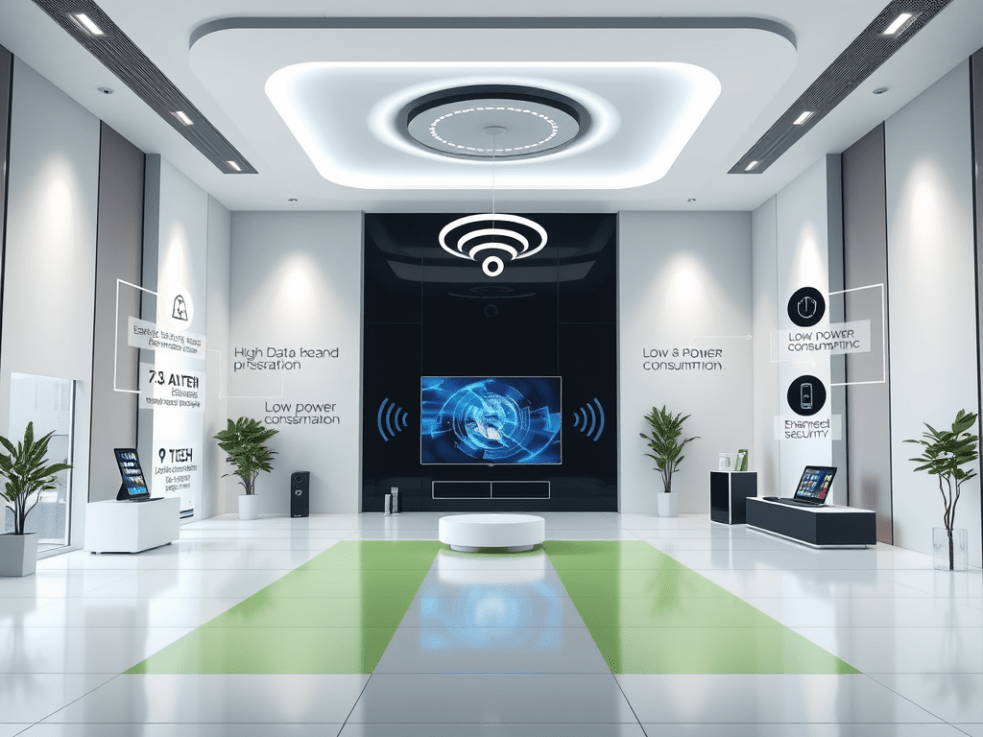
Advantages and Disadvantages of Ultra-Wideband Technology

Ultra-Wideband (UWB) is a wireless communication technology that operates over a wide frequency spectrum (typically greater than 500 MHz). Unlike conventional narrowband systems, UWB transmits information by sending short-duration pulses over a wide frequency range, which allows for high data rates and precise positioning capabilities. UWB has gained significant attention in recent years due to its applications in areas such as indoor positioning systems, secure keyless entry, health monitoring, and wireless communication. However, like any technology, UWB comes with both advantages and disadvantages.

Advantages of UWB

High Precision Location Tracking

One of the standout features of UWB is its ability to provide highly accurate location tracking, often within a few centimeters. This makes it ideal for indoor navigation, asset tracking, and smart home applications where precise positioning is crucial. Solutions like UbiTrack have leveraged UWB to offer real-time tracking systems in warehouses, factories, and healthcare environments.

High Data Transfer Rates

UWB can transmit data at very high speeds over short distances. This is particularly useful for high-bandwidth applications such as streaming uncompressed video, wireless USB, and file transfers between devices.

Low Power Consumption

Despite its high data rate, UWB is known for its low power requirements, especially in comparison to other wireless technologies like Wi-Fi or Bluetooth. This makes it well-suited for battery-powered devices such as wearables and IoT sensors.

Resistance to Interference

Due to its wide frequency spectrum and low power spectral density, UWB is less susceptible to interference from other wireless technologies operating in the same environment. This results in more stable connections and improved performance in congested radio environments.

Enhanced Security

The short-range and pulse-based transmission of UWB signals make them more difficult to intercept or jam, offering enhanced security. This is why UWB is increasingly used in applications such as secure vehicle access and contactless payments.

Disadvantages of UWB

Short Range

While UWB excels in data speed and accuracy, its effective range is limited. It performs best over short distances (typically under 10 meters), which restricts its use in long-range communication scenarios.

Limited Adoption and Compatibility

UWB is not as widely adopted as other wireless technologies like Bluetooth or Wi-Fi. As a result, fewer consumer devices support UWB, which can limit its usefulness unless integrated into ecosystems by major manufacturers.

Higher Implementation Costs

The cost of implementing UWB technology, including specialized hardware and infrastructure, can be relatively high. This can be a barrier for small businesses or consumers looking for budget-friendly solutions.

Regulatory Challenges

UWB operates over a broad frequency spectrum that overlaps with other services, which can lead to regulatory restrictions in different countries. This variability can complicate international deployment.

Signal Attenuation and Obstruction

UWB signals can be significantly affected by physical barriers such as walls, metal, and water, which may reduce signal strength or accuracy in real-world environments.

Conclusion

UWB is a promising wireless communication technology with several significant advantages, particularly in precision tracking, high-speed data transmission, and low power consumption. However, its short range, limited adoption, and implementation costs pose challenges to its broader deployment. As UWB continues to be adopted in smart devices and automotive systems, platforms like UbiTrack demonstrate how the technology can be effectively used to create smart, efficient environments. With continued innovation and support from regulatory bodies, UWB has the potential to become a cornerstone of next-generation wireless systems.

Top 5 Advantages of Using UbiTrack UWB Positioning Systems for Indoor Navigation

Indoor navigation technology has rapidly advanced, and UbiTrack’s UWB positioning system has emerged as one of the most reliable and efficient solutions for precise tracking. Unlike traditional GPS, UWB systems are designed for indoor environments, making them ideal for industries such as warehouses, hospitals, offices, and factories. Here are the top 5 advantages of using UWB positioning systems for indoor navigation.

1. Centimeter-Level Accuracy

One of the most significant advantages of UWB systems is their exceptional accuracy. With location precision within 10-30 centimeters, UWB offers far more accurate tracking than traditional systems like Bluetooth or Wi-Fi, which are typically less precise.

This level of accuracy is essential in environments where exact positioning is critical. For example, in asset tracking, knowing the precise location of a piece of equipment can save businesses time and money by preventing lost tools and optimizing the use of valuable resources. In applications like robotics navigation or automated guided vehicles (AGVs), accuracy ensures smooth operations and prevents costly errors.

2. Real-Time Location Tracking

UWB systems provide real-time tracking, allowing businesses to monitor the movement of people, assets, and vehicles as they move through indoor spaces. This continuous flow of information is invaluable for efficient operations.

For example:

In warehouses, UWB ensures timely processing of goods by providing real-time inventory updates.

In healthcare, it enables the real-time monitoring of medical equipment, ensuring that vital tools are always in the right place when needed.

In manufacturing, it helps track worker safety and asset location, ensuring smooth operations.

Real-time insights allow businesses to make quick, data-driven decisions that increase productivity and reduce operational delays.

3. Scalable and Flexible Deployment

UWB systems are highly scalable and can be easily deployed across any size facility. Whether it’s a small office, a sprawling multi-floor warehouse, or a large industrial complex, the system can grow with your business needs.

The flexibility of UWB systems ensures that they can be adapted to various environments. Anchors and tags can be strategically placed to ensure full coverage in critical areas, and additional units can be added as needed. This scalability is ideal for businesses that are expanding or have dynamic operational environments where layouts change over time.

This makes UWB technology a future-proof solution that can evolve alongside your business.

4. Resistant to Interference

UWB positioning systems excel in environments where traditional technologies, such as Bluetooth or Wi-Fi, might struggle. UWB’s wide frequency range and ultra-low-power signals allow it to pass through obstacles more effectively, ensuring reliable performance even in challenging conditions.

This capability makes UWB particularly effective in:

Manufacturing facilities, where metal structures and machinery can interfere with traditional signals.

Warehouses, where shelving and complex layouts often disrupt other systems.

Underground locations or environments with dense materials that would block GPS signals.

With its resistance to interference, UWB maintains consistent and reliable performance, ensuring uninterrupted tracking across diverse indoor environments.

5. Enhanced Safety and Security

Safety is a primary concern for any organization, and UWB positioning systems help improve safety with virtual geofencing and zoning capabilities. By defining specific areas or zones, the system can track and alert managers when personnel or assets enter restricted or dangerous areas.

For example:

In construction sites or factories, workers can be notified if they enter high-risk zones near heavy machinery or hazardous materials.

In healthcare settings, the system ensures that personnel are always within safe areas, particularly when handling sensitive equipment or working in critical care units.

In smart buildings, UWB systems can monitor access to secure areas, enhancing overall security.

With these features, businesses can reduce accidents, ensure regulatory compliance, and create safer working environments for their employees.

Conclusion

UWB positioning systems offer numerous advantages for businesses seeking efficient, accurate, and reliable indoor navigation. From centimeter-level accuracy and real-time tracking to scalabilityresistance to interference, and enhanced safety features, UWB technology provides a robust solution to meet the demands of modern industries.

UbiTrack offers a perfect example of how UWB systems can improve operations across a wide range of environments. By leveraging these powerful capabilities, businesses can streamline operations, boost productivity, and improve safety in a variety of industries.

The Value of Wi-Fi Positioning Systems in 2025

As technology continues to advance rapidly in 2025, businesses and developers have more options than ever when it comes to location-based services. With 5G, ultra-wideband (UWB), and advanced satellite systems like Galileo in play, it’s natural to wonder if Wi-Fi Positioning Systems (WPS) still have a place. The answer? Absolutely. Here’s why WPS remains a valuable solution in today’s landscape.

Ubiquitous Infrastructure with Minimal Cost

Wi-Fi networks are everywhere. Offices, malls, campuses, airports, hospitals, and homes all rely on Wi-Fi, making it an ideal foundation for positioning systems. Unlike GPS, which struggles indoors, or UWB, which requires specialized and expensive hardware, WPS leverages the existing infrastructure. This makes it incredibly cost-effective and simple to deploy at scale. Solutions like UbiTrack, which seamlessly integrate with existing Wi-Fi setups, highlight just how practical and efficient this approach can be.

Reliable Indoor Accuracy

In 2025, one of the strongest use cases for WPS is indoor positioning. GPS falters inside buildings, while WPS can deliver room-level accuracy without requiring users to carry extra devices or install special apps. Enhanced signal processing and machine learning models have improved accuracy significantly, allowing WPS to compete with newer, more expensive systems in indoor settings.

Part of a Powerful Hybrid Approach

Modern location services often rely on hybrid positioning systems that combine multiple technologies—GPS, Bluetooth, UWB, and Wi-Fi—for seamless transitions between indoor and outdoor environments. In this mix, Wi-Fi serves as the dependable middle layer, bridging coverage gaps and maintaining consistent tracking without driving up costs.

Stronger Privacy and Security Standards

As data privacy regulations have tightened, Wi-Fi positioning systems have evolved to meet them. Today’s systems incorporate user consent, encryption, and anonymization features, making them safe for use in sensitive areas like healthcare, education, and enterprise settings. This enhanced trust makes WPS not only practical but also compliant.

Diverse, Evolving Use Cases

Wi-Fi positioning continues to unlock new applications:

Smart buildings optimize HVAC and lighting based on occupancy data.

Retailers analyze customer movement to improve store layouts.

Museums and airports offer personalized, real-time navigation.

Emergency responders use WPS to locate individuals indoors during evacuations.

Leading platforms like UbiTrack are already enabling these innovations, offering scalable, plug-and-play Wi-Fi positioning solutions for industries of all sizes. 

Conclusion: Still Relevant, Still Smart

While newer technologies often steal the spotlight, Wi-Fi Positioning Systems remain a smart, reliable, and cost-effective choice in 2025. Especially in indoor and hybrid environments, WPS continues to offer tremendous value. Its adaptability and proven effectiveness ensure it’s not just still relevant—it’s often the best tool for the job.

The Rise of Ultra-Wideband Technology in Various Industries

Ultra-Wideband (UWB) technology is rapidly gaining traction across various sectors due to its ability to provide high-precision, real-time location tracking with centimeter-level accuracy. As businesses seek more advanced solutions for tracking, monitoring, and managing assets, UWB has emerged as a transformative tool in industries ranging from healthcare and manufacturing to logistics and smart buildings. In this article, we explore the rise of UWB technology and how it is impacting different industry verticals, with a special look at how UbiTrack is leading the way in UWB-powered solutions.

Understanding UWB Technology

UWB is a wireless communication technology that uses a broad range of frequencies over a wide bandwidth. Unlike traditional wireless communication methods like Bluetooth or Wi-Fi, UWB operates at extremely high frequencies, enabling it to transmit signals with high precision over short distances. This makes UWB an ideal solution for indoor positioning systems (IPS), asset tracking, and other applications that require pinpoint accuracy.

The key benefits of UWB include:

Centimeter-level accuracy: UWB technology can determine location with extreme precision, which is crucial for industries requiring detailed tracking data.

Low power consumption: UWB operates efficiently, making it ideal for battery-powered devices.

High data throughput: UWB can transmit large amounts of data at high speeds, supporting applications like real-time data analytics.

UbiTrack is one of the leading companies utilizing UWB technology to provide accurate indoor location tracking solutions. With its advanced UWB-powered RTLS systems, UbiTrack is helping businesses across various sectors achieve seamless tracking and real-time data analysis.

Impact of UWB on Healthcare

In healthcare, UWB technology is transforming how medical facilities manage their resources and ensure patient safety. With UWB-powered Real-Time Location Systems (RTLS), hospitals can track medical equipment, staff, and even patients in real-time, optimizing workflow and improving patient care.

Key benefits in healthcare:

Asset tracking: UWB helps track critical medical equipment like ventilators, infusion pumps, and wheelchairs, reducing equipment loss and downtime.

Patient safety: UWB enables the tracking of patient movements, ensuring that patients are safe and staff can quickly respond in case of emergencies.

Staff efficiency: By locating staff members in real time, hospitals can ensure that the right personnel is available at the right time, improving the efficiency of operations.

UWB in Manufacturing and Warehousing

In the manufacturing and warehousing sectors, UWB technology is revolutionizing operations by improving supply chain visibility, reducing downtime, and enhancing inventory management. UWB-powered RTLS solutions, such as those offered by UbiTrack, allow businesses to track assets, tools, and workers with pinpoint accuracy, providing real-time insights into production processes.

Key benefits in manufacturing:

Inventory management: UWB systems help businesses track raw materials and finished goods, preventing stockouts and overstocking while ensuring timely deliveries.

Asset management: Manufacturing facilities can use UWB to monitor the location of valuable assets, reducing the risk of theft or misplacement.

Worker safety: UWB can track the location of workers in hazardous areas, ensuring they are not exposed to unsafe conditions or restricted zones.

The Role of UWB in Logistics and Supply Chain

UWB is making significant strides in logistics and supply chain management by providing real-time tracking for goods, vehicles, and shipments. UWB systems improve efficiency by enabling businesses to track products through every stage of the supply chain, from warehousing to delivery.

Key benefits in logistics:

Real-time tracking: UWB ensures that shipments can be tracked throughout the supply chain, reducing the risk of lost goods and improving visibility.

Fleet management: UWB enables fleet managers to monitor vehicle locations, ensuring optimized delivery routes and reducing fuel consumption.

Predictive analytics: By tracking assets in real time, businesses can use UWB data to predict maintenance needs, improving operational efficiency.

UWB in Smart Buildings and IoT

The integration of UWB technology into smart buildings is creating more connected, efficient, and secure environments. UWB’s ability to provide precise indoor positioning has a significant impact on building management systems, security, and energy efficiency.

Key benefits in smart buildings:

Space optimization: UWB allows for better management of building resources by tracking asset and personnel locations in real time, helping to optimize space usage.

Enhanced security: UWB can track personnel in sensitive areas and trigger alerts if unauthorized individuals enter restricted zones.

Energy management: By tracking the usage of lighting, HVAC systems, and other resources, UWB can help reduce energy consumption in smart buildings, contributing to sustainability efforts.

UWB in Retail and Consumer Applications

The retail and consumer sectors are also embracing UWB for a variety of applications, from enhancing in-store experiences to improving inventory management. UWB enables retailers to create personalized experiences for customers while simultaneously improving supply chain operations.

Key benefits in retail:

Indoor navigation: UWB can power indoor navigation systems, guiding customers to specific products within large retail stores, improving the shopping experience.

Inventory tracking: Retailers can use UWB to track inventory in real time, ensuring accurate stock levels and preventing out-of-stock situations.

Contactless payments: UWB can enable secure, contactless payment systems that offer a faster and safer alternative to traditional payment methods.

Conclusion

As UWB technology continues to evolve, its potential across various industries is immense. By enabling precise location tracking and real-time data analytics, UWB is transforming how businesses operate and manage resources. From improving patient care in hospitals to enhancing supply chain efficiency in logistics, the applications of UWB are vast and growing. Companies like UbiTrack are leading the charge, offering innovative UWB solutions that are reshaping industries and driving operational excellence. As more industries adopt this game-changing technology, we can expect UWB to drive innovation and enhance operational efficiency across the global economy.

UbiTrack: Multi-Algorithm, Multi-Mode, Non-Stop Centimeter-Level Positioning Service Platform

UbiTrack is an advanced, multi-faceted positioning service platform designed to deliver high-accuracy location tracking, real-time monitoring, and extensive data integration. By leveraging a multi-algorithm hybrid processing system, the platform supports a variety of tracking modes and provides centimeter-level accuracy, whether in 0D, 1D, 2D, or 3D environments. With non-stop real-time positioning capabilities, UbiTrack ensures precise, continuous location tracking with a robust feature set to cater to various needs.

Technical Features

Multi-Algorithm Hybrid Processing

UbiTrack integrates several advanced positioning algorithms to offer reliable and accurate location data. By combining different techniques, it provides optimal performance in diverse operational environments, ensuring maximum precision regardless of obstacles or signal interference.

0-3D Multi-Dimensional Positioning

The system supports zero-dimensional (monitoring), one-dimensional (tunnel or narrow area), two-dimensional (accurate plane), and three-dimensional (panoramic) positioning. This versatility allows UbiTrack to track and locate assets, personnel, or vehicles in virtually any environment, from indoor spaces to expansive outdoor areas.

Non-stop Real-Time Positioning

Real-time positioning ensures continuous tracking of any tagged entity without interruption. Whether operating online or offline, UbiTrack offers up-to-date tracking with minimal delay, providing instant access to location data.

Electronic Fence and Track Playback

Advanced electronic fence features allow for the creation of rectangular, circular, or polygonal zones. These fences trigger entry/exit warnings, making it easy to monitor movement and ensure compliance with specific location boundaries. The platform also supports historical track playback at variable speeds, enabling users to review paths taken by tagged entities at any given time.

Additional Key Features

Face Recognition Video Linkage

Surveillance camera systems are integrated with real-time face recognition capabilities. The system can link video feeds to positioning tags, matching faces to specific locations for enhanced security. Additionally, camera positions can be preset and adjusted as needed, offering greater flexibility in monitoring and data collection.

Device Management and Monitoring

The platform supports the management of various connected devices, including health monitoring features like heart rate and blood oxygen levels. Users receive alerts based on abnormal data readings, ensuring timely intervention when needed. Comprehensive device reports can be generated for further analysis.

Comprehensive Alarm Management

Robust alarm management features trigger alerts when certain thresholds are breached, and users can access a history of alarm data. The system also allows for exporting alarm-related information for detailed reporting and analysis.

Open API/SDK Integration

To enable easy integration with existing systems, UbiTrack offers an open API interface and SDK. These tools facilitate rapid data docking and efficient integration with other platforms, streamlining the development process for customized solutions.

Conclusion

UbiTrack stands out as an all-encompassing solution designed for a wide range of applications. Its multi-algorithm, multi-mode capabilities ensure precision tracking, while its non-stop real-time positioning provides continuous location monitoring. The platform’s ability to integrate face recognition, device management, and customizable alarms offers an added layer of security and operational intelligence. Additionally, the open API and SDK ensure seamless integration, allowing businesses to create tailored solutions. With its combination of accuracy, flexibility, and comprehensive features, UbiTrack is a powerful tool for organizations looking to enhance their tracking, security, and data management capabilities.

Top Reasons Why Ultra-Wideband (UWB) is Ideal for Your Factory or Business

When it comes to adopting new technology no business wants to remain behind. They are giving preferences to the innovations and integrating them into their business. Sensing location information in indoor environments is a challenging task as it requires a high level of accuracy and precision. In the indoor environment, different objects reflect and disperse signals. One such latest IoT technology is UWB locations system which has shown better performance in indoor positioning. It has generated lots of excitement due to the level of location precision offered by the UWB positioning system. This positioning system can pinpoint location in real-time.

Here are some of the reasons mentioned why you need UWB positioning system for your business:

High-level of accuracy

One of the great benefits of UWB positioning is its accuracy. The high-bandwidth and low-frequency signal can pass through a variety of obstacles. The UWB positioning system is much accurate than Wi-Fi and Bluetooth. The accuracy of 30 centimeters can be achieved and thus it is quite beneficial for the factories to position moving objects. In plants, the accurate solution is crucial as weaker accuracy produces an erroneous picture. 

Less power consumption and Scalability

Location tags used by UWB indoor positioning system can work for a long duration due to low power usage. Without recharge, a location tag can collect data for two years. Hence, it reduces the maintenance costs for indoor positioning. A UWB-based indoor positioning system can track many tags in one facility. Thus, it is quite suitable for every size of the industry. The growing business that uses UWB system helps them to include more assets and cover a large area without re-installation. 

Deployment time is less

Installing the infrastructure for a UWB based system does not require much time. Also, it does not hamper the ongoing activities and there is no need to pause operations. Hence, the business can integrate this modern technology within a few hours. There are many renowned companies available in the marketplace that offer a UWB-based location tracking system for every size of business.

Minimum radio interference

As compared to phones and other equipment that generates radio signals, UWB has less power and spreads evenly over a wide range of the spectrum. Thus, it is suitable to be used in hospitals, production facilities, and other multi-room spaces.

UbiTrack is a world-popular brand that manufactures and supplies indoor positioning solutions with high accuracy, flexibility, and low cost. Accurate Heart Rate Monitor Watch is one of its most-popular products which is affordable and has lots of features.

UbiTrack High-Precision Positioning System: Revolutionizing Location Accuracy

In an era where location-based services are becoming increasingly essential, the high-precision positioning system stands out as a game-changer. Designed to deliver unparalleled accuracy and reliability, UbiTrack is transforming industries that rely heavily on precise location data, from logistics and transportation to agriculture and construction.

What is UbiTrack?

UbiTrack is an advanced Indoor positioning system that leverages a combination of GNSS (Global Navigation Satellite System) technology and innovative algorithms to provide real-time, high-precision location tracking. Unlike traditional GPS systems, which can have accuracy levels within several meters, UbiTrack offers centimeter-level precision, making it ideal for applications where exact positioning is crucial.

Key Features

High Accuracy: The standout feature of UbiTrack is its ability to achieve sub-meter accuracy in challenging environments. This is particularly valuable in urban areas or dense forests where satellite signals may be obstructed.

Real-Time Data Processing: UbiTrack utilizes cutting-edge data processing techniques that allow for instantaneous location updates. This is vital for applications that require immediate feedback, such as autonomous vehicles or fleet management.

Versatility: The system is designed to be versatile, functioning seamlessly in a wide range of applications. Whether it’s monitoring the movements of agricultural machinery, tracking shipments in logistics, or providing location data for construction projects, UbiTrack excels.

User-Friendly Interface: With a focus on ease of use, UbiTrack comes equipped with an intuitive interface that enables users to visualize and manage their data effortlessly. This feature is particularly beneficial for companies that may not have a dedicated technical team.

Robustness: Built to withstand harsh environments, UbiTrack is engineered for durability. Its hardware can operate in extreme temperatures and challenging weather conditions, ensuring reliable performance across various settings.

Applications Across Industries

The impact of UbiTrack is felt across numerous sectors. In agriculture, for instance, it enables farmers to optimize field operations by providing precise data on equipment location, which can enhance yield and reduce waste. In logistics, companies can improve efficiency by tracking shipments in real time, ensuring timely deliveries and reducing operational costs.

In construction, UbiTrack aids in project management by allowing teams to monitor machinery and materials, ensuring they are in the right place at the right time. This not only streamlines operations but also minimizes delays and cost overruns.

Conclusion

The high-precision positioning system represents a significant advancement in location technology. By providing unmatched accuracy, real-time data processing, and versatility across various applications, UbiTrack is poised to redefine standards in industries that rely on precise location data. As businesses continue to embrace digital transformation, solutions like UbiTrack will undoubtedly play a pivotal role in driving efficiency and innovation.