The Way UbiTrack’s Real-Time Location Data Helps Businesses Stay One Step Ahead

Knowing exactly where things are inside a building can change the way a business runs. Whether you are managing equipment, helping visitors find their way, or keeping track of your team, accurate indoor location data makes everything smoother. That is where UbiTrack comes in with its advanced UWB Indoor Positioning System and GPS Indoor Positioning System.

Why Is Indoor Positioning Important?

 GPS does a great job outside, but once you step inside a building, it can struggle—signals get weak or disappear altogether. That is where its Indoor Navigation Positioning System comes in. It works smoothly indoors, making it easy to keep track of people, equipment, or vehicles with exact accuracy anywhere inside your space.

One of the best things about UbiTrack is how much time it saves. Without it, people might spend hours trying to find tools, vehicles, or equipment. That wastes a lot of work time and slows everything down. But with it, you can see exactly where everything is right away, so less time is wasted, and more work gets done. 

How Does It Benefit Your Business?

Find Assets Fast:

    With an indoor position tracking system, you will not waste time searching for tools or equipment. Everything’s exactly where it should be, saving time and boosting productivity.

    Help People Navigate Easily:

     Whether it is customers in a store or employees in a large office, Indoor Navigation Positioning System helps everyone get where they need to go, fast and safely.

    Increase Security:

    Get instant alerts if something or someone moves into the wrong area.  Real-time tracking keeps your assets and people safer.

    Make Smarter Choices:

    Use the data from UbiTrack to see how your space and resources are used. This helps you plan better and operate more efficiently.

     Easy to Use and Ready to Grow:


    Using it is also easy. You don’t need special training or expensive equipment to get started. The system works with devices you already use, like smartphones and computers, making it simple to monitor your assets anytime, anywhere. This ease of use means you can focus on running your business, not learning complicated software.

    Track is simple to install and works for any size business — from a small office to a large warehouse. Our system fits your needs and grows with you, without complicated setups.

     Conclusion

    In the end, real-time location data is about giving your business the confidence to act quickly, avoid surprises, and deliver great results. UbiTrack’s powerful yet simple platform puts that power in your hands. Whether you want to optimise operations, improve customer service, protect assets, or just gain peace of mind, it can help you stay one step ahead.
    This Tech Is Changing Warehouses Forever — Meet UbiTrack’s Real-Time Locator

    Warehouses have always been bustling hubs of activity — filled with workers, pallets, forklifts, and countless assets moving in every direction. But with so much going on, keeping track of inventory and equipment can feel like chasing shadows. Enter a game-changing technology that’s transforming warehouse operations: UbiTrack’s real-time locator.

    Why Warehouse Tracking Matters More Than Ever

    In today’s fast-paced supply chain, even a small delay or misplaced item can lead to costly disruptions. The ability to locate tools, inventory, or machinery instantly is no longer a luxury — it’s a necessity. Traditional tracking methods, like barcode scanning or manual logging, are slow, prone to errors, and often require physical presence.

    Real-time location systems (RTLS) are changing all that by offering instant visibility across the entire warehouse floor. But not all tracking technologies are created equal. Some struggle with accuracy or require expensive infrastructure. That’s where UbiTrack steps in with its innovative approach.

    What Makes UbiTrack’s Real-Time Locator Different?

    UbiTrack leverages ultra-wideband (UWB) technology — a wireless method known for pinpoint accuracy and reliability, especially indoors where GPS signals are weak or unavailable. This means warehouse managers can track assets with precision down to a few centimeters, in real time.

    Setting up the system is surprisingly simple. UbiTrack’s devices communicate seamlessly with small anchors installed around the warehouse, creating a smart network that keeps tabs on tagged items and personnel alike. No need for complicated wiring or large hardware investments.

    Beyond just locating assets, this technology provides valuable data insights. Managers can analyze movement patterns, optimize workflows, and even enhance worker safety by monitoring zones and alerting supervisors if someone enters a restricted area.

    Real Benefits for Warehouse Operations

    The impact of this technology on warehouse efficiency is profound. Imagine cutting down the time workers spend searching for tools or inventory. That translates to faster order fulfillment, reduced downtime, and significant cost savings.

    With UbiTrack, lost equipment becomes a thing of the past. Forklifts, pallets, or safety gear tagged with UWB devices are tracked continuously, ensuring nothing disappears into the chaos. Plus, the system’s real-time alerts keep everyone informed and proactive.

    Safety also gets a boost. The ability to monitor where people and machinery are at all times helps prevent accidents, improving overall workplace conditions.

    Why Now Is the Time to Upgrade

    Warehouses are evolving rapidly, adapting to the demands of e-commerce, just-in-time delivery, and complex supply chains. Staying competitive means adopting smarter tools that keep operations running smoothly.

    By integrating UbiTrack’s real-time locator, companies aren’t just keeping up — they’re leading the way in warehouse innovation. The system scales easily, so it fits warehouses of all sizes, from local distribution centers to massive logistics hubs. 

    The Future of Indoor Tracking Is Here: UbiTrack’s UWB Tech Will Blow Your Mind!

     In a world dominated by GPS and satellite navigation, tracking objects or people outdoors has become second nature. But when it comes to navigating complex indoor environments like factories, hospitals, warehouses, or office buildings, traditional positioning systems often fall short. This is where UbiTrack, a next-generation Ultra-Wideband (UWB) indoor positioning system, is changing the game — and changing it fast.

    What Makes This UWB Technology So Powerful?

    Harnessing the power of UWB — a radio technology that transmits data over a wide frequency range — this system delivers centimeter-level accuracy. Unlike Wi-Fi, Bluetooth, or RFID systems, which typically have error margins of several meters, UWB can pinpoint the exact location of a tag or object in real time with minimal interference.

    This level of precision opens the door to an entirely new world of indoor tracking applications. Whether you’re trying to locate a tool in a large manufacturing plant or ensure the safety of staff in a high-risk environment, this solution ensures you know exactly where everything is, every second of the day.

    A Complete Real-Time Location Solution

    This is not just hardware — it’s a full real-time location system (RTLS). It combines UWB-based anchors, wearable or mountable tags, and a powerful backend system that visualizes positioning data on a 3D map of your facility.

    Its platform provides:

    Real-time tracking of people and assets

    Historical route playback to analyze movement over time

    Smart alerts and geofencing to notify you of breaches or unsafe activity

    Behavior analysis to optimize workflows and improve safety

    Easy integration with third-party platforms and ERP systems

    Transforming Industries with Precision

    Manufacturing & Warehousing

    Smart factories use this technology to monitor the location of workers, tools, and equipment. The result? Increased productivity, reduced downtime, and enhanced safety. Managers can quickly identify bottlenecks, improve layout efficiency, and prevent accidents before they happen.

    Healthcare

    In hospitals, every second counts. Real-time tracking of medical personnel, patients, and critical equipment like defibrillators and infusion pumps improves patient care, minimizes equipment loss, and speeds up emergency response times. Combined with an accurate heart rate monitor watch, it offers even deeper insight into staff well-being and patient status during emergencies.

    Offices & Campuses

    Large office buildings and universities use this system to improve security, streamline resource management, and enhance visitor tracking. Custom geofencing ensures people only access authorized zones.

    Easy to Deploy, Scalable to Your Needs

    Unlike many indoor positioning solutions that require complex installation or calibration, this UWB system offers plug-and-play deployment with high scalability. Whether monitoring one room or an entire campus, the system can grow with your needs — and stay cost-effective. Integrated with wearable solutions like an accurate heart rate monitor watch, the potential for real-time biometric and location tracking is limitless.

    The Bottom Line

    The future of indoor positioning is here, and it’s more accurate, intelligent, and adaptable than ever before. UbiTrack’s UWB system is at the forefront of this shift, empowering businesses with the tools they need to operate smarter, safer, and more efficiently.

    If you’re ready to unlock the full potential of your indoor spaces, it’s time to take a closer look at what UbiTrack can do.   

    Top 5 Advantages of Using UbiTrack UWB Positioning Systems for Indoor Navigation

    Indoor navigation technology has rapidly advanced, and UbiTrack’s UWB positioning system has emerged as one of the most reliable and efficient solutions for precise tracking. Unlike traditional GPS, UWB systems are designed for indoor environments, making them ideal for industries such as warehouses, hospitals, offices, and factories. Here are the top 5 advantages of using UWB positioning systems for indoor navigation.

    1. Centimeter-Level Accuracy

    One of the most significant advantages of UWB systems is their exceptional accuracy. With location precision within 10-30 centimeters, UWB offers far more accurate tracking than traditional systems like Bluetooth or Wi-Fi, which are typically less precise.

    This level of accuracy is essential in environments where exact positioning is critical. For example, in asset tracking, knowing the precise location of a piece of equipment can save businesses time and money by preventing lost tools and optimizing the use of valuable resources. In applications like robotics navigation or automated guided vehicles (AGVs), accuracy ensures smooth operations and prevents costly errors.

    2. Real-Time Location Tracking

    UWB systems provide real-time tracking, allowing businesses to monitor the movement of people, assets, and vehicles as they move through indoor spaces. This continuous flow of information is invaluable for efficient operations.

    For example:

    In warehouses, UWB ensures timely processing of goods by providing real-time inventory updates.

    In healthcare, it enables the real-time monitoring of medical equipment, ensuring that vital tools are always in the right place when needed.

    In manufacturing, it helps track worker safety and asset location, ensuring smooth operations.

    Real-time insights allow businesses to make quick, data-driven decisions that increase productivity and reduce operational delays.

    3. Scalable and Flexible Deployment

    UWB systems are highly scalable and can be easily deployed across any size facility. Whether it’s a small office, a sprawling multi-floor warehouse, or a large industrial complex, the system can grow with your business needs.

    The flexibility of UWB systems ensures that they can be adapted to various environments. Anchors and tags can be strategically placed to ensure full coverage in critical areas, and additional units can be added as needed. This scalability is ideal for businesses that are expanding or have dynamic operational environments where layouts change over time.

    This makes UWB technology a future-proof solution that can evolve alongside your business.

    4. Resistant to Interference

    UWB positioning systems excel in environments where traditional technologies, such as Bluetooth or Wi-Fi, might struggle. UWB’s wide frequency range and ultra-low-power signals allow it to pass through obstacles more effectively, ensuring reliable performance even in challenging conditions.

    This capability makes UWB particularly effective in:

    Manufacturing facilities, where metal structures and machinery can interfere with traditional signals.

    Warehouses, where shelving and complex layouts often disrupt other systems.

    Underground locations or environments with dense materials that would block GPS signals.

    With its resistance to interference, UWB maintains consistent and reliable performance, ensuring uninterrupted tracking across diverse indoor environments.

    5. Enhanced Safety and Security

    Safety is a primary concern for any organization, and UWB positioning systems help improve safety with virtual geofencing and zoning capabilities. By defining specific areas or zones, the system can track and alert managers when personnel or assets enter restricted or dangerous areas.

    For example:

    In construction sites or factories, workers can be notified if they enter high-risk zones near heavy machinery or hazardous materials.

    In healthcare settings, the system ensures that personnel are always within safe areas, particularly when handling sensitive equipment or working in critical care units.

    In smart buildings, UWB systems can monitor access to secure areas, enhancing overall security.

    With these features, businesses can reduce accidents, ensure regulatory compliance, and create safer working environments for their employees.

    Conclusion

    UWB positioning systems offer numerous advantages for businesses seeking efficient, accurate, and reliable indoor navigation. From centimeter-level accuracy and real-time tracking to scalabilityresistance to interference, and enhanced safety features, UWB technology provides a robust solution to meet the demands of modern industries.

    UbiTrack offers a perfect example of how UWB systems can improve operations across a wide range of environments. By leveraging these powerful capabilities, businesses can streamline operations, boost productivity, and improve safety in a variety of industries.

    Indoor Anchor: Accurate, Scalable Location Tracking for Every Industry

    The Indoor Anchor is a crucial component of Ubitrack’s advanced real-time location tracking system, designed to help businesses efficiently monitor and manage assets and personnel in indoor environments. It plays a significant role in enabling precise indoor positioning with high accuracy and reliability.

    Indoor Anchor

    The Indoor Anchor is a network device that communicates with other elements of Ubitrack’s tracking system, such as tags or mobile devices, to determine and track their location within a building. It works in conjunction with the tracking platform, providing real-time data on the position of assets, equipment, and individuals. The anchor leverages Bluetooth Low Energy (BLE) technology, advanced algorithms, and other sensors to provide precise tracking in indoor spaces where GPS signals are unavailable. As an Indoor Positioning Sensor, it ensures high precision even in challenging environments. This technology also supports Wireless Indoor Positioning, making it easier to track assets without the need for wired systems.

    Features

    High-Precision Indoor Tracking: The Indoor Anchor enables centimeter-level accuracy for asset tracking, allowing businesses to pinpoint the location of resources in large and complex indoor spaces.

    Scalable and Flexible: The system is designed to be scalable, making it suitable for a wide range of business environments. Whether in a small office or a sprawling industrial warehouse, the Indoor Anchor can be easily integrated and expanded to ensure full coverage.

    Real-Time Monitoring: The Indoor Anchor constantly transmits location data to the tracking platform, delivering real-time insights on the position of all tracked entities. This ensures businesses always have up-to-date information on their assets and personnel.

    Cost-Effective Solution: By utilizing BLE and other low-power technologies, the Indoor Anchor minimizes energy consumption, reducing operational costs compared to more power-hungry alternatives.

    Easy Installation: Designed for simplicity, the Indoor Anchor is easy to install and configure. It can be strategically placed within a building to create a seamless tracking environment with minimal setup time.

    Improved Efficiency: With access to detailed location data, businesses can optimize workflows, prevent asset misplacement, and enhance overall operational efficiency. This is particularly valuable in industries like healthcare, logistics, and manufacturing.

    Industries Benefiting from the Indoor Anchor

    The Indoor Anchor finds applications across a variety of industries such as healthcare, manufacturing, logistics, and retail. For example, in healthcare, it helps track medical equipment, ensuring devices are readily available when needed. In manufacturing, it allows companies to monitor equipment usage and maintenance, minimizing downtime and improving productivity.

    Why Choose the Indoor Anchor?

    The Indoor Anchor offers a reliable, scalable, and cost-efficient solution for real-time indoor location tracking. With its high accuracy, ease of integration, and ability to deliver real-time data, it significantly enhances operational efficiency across different industries. Whether it’s tracking assets, personnel, or equipment, the Indoor Anchor enables businesses to optimize their indoor environments and make more informed, data-driven decisions. UbiTrack’s solution empowers businesses to take full control over their indoor spaces, fostering smarter decision-making and improved productivity.

    Smart Elderly Care: Enhancing Quality of Life

    As the global population ages, the need for effective elderly care solutions has never been more critical. UbiTrack’s Smart Elderly Care system is designed to address this growing demand, offering a comprehensive approach that combines technology with compassionate care.

    Understanding Smart Elderly Care

    Smart Elderly Care leverages advanced technology to monitor and support the well-being of seniors. By utilizing wearables, sensors, and smart home devices, UbiTrack provides a holistic view of an elderly individual’s health and safety. This system tracks vital signs and monitors daily activities, ensuring that seniors remain safe and engaged in their daily lives.

    Key Features

    One of the standout features of UbiTrack’s system is its real-time monitoring capability. Family members and caregivers can receive instant notifications if any unusual activity is detected. For instance, if a senior has not moved for an extended period, the system alerts caregivers, allowing for quick intervention if needed.

    Additionally, the platform includes fall detection technology, which is particularly vital for elderly individuals. Falls are one of the leading causes of injury among seniors, and immediate assistance can significantly reduce the risk of severe outcomes. The Smart Elderly Care system automatically alerts designated contacts when a fall is detected, ensuring prompt support.

    Promoting Independence

    One of the primary goals of UbiTrack’s Smart Elderly Care is to promote independence among seniors. The system is designed to empower elderly individuals to live in their own homes for as long as possible. By providing tools that support daily activities and health management, seniors can maintain their autonomy while still receiving the care they need.

    The integration of voice-activated devices and user-friendly applications allows seniors to interact with their environment easily. Whether it’s setting reminders for medication or communicating with family, technology can facilitate a higher quality of life.

    Conclusion

    UbiTrack’s Smart Elderly Care represents a significant advancement in how we approach elderly care. By combining technology with a focus on individual needs, this system enhances the safety, health, and independence of seniors. As we continue to innovate in this space, the future of elderly care looks brighter, ensuring that our aging population can live with dignity and comfort. Embracing smart solutions is not just about safety; it’s about enriching lives.

    Elevate Your Warehouse Operations with Advanced Stock Monitoring Technology

    In the fast-paced world of warehousing and logistics, maintaining accurate stock levels and efficient inventory management is crucial. The introduction of advanced technology has revolutionized how warehouses monitor and manage their inventory. One of the most significant advancements in this area is the Warehouse Stock Monitoring Device. This sophisticated tool is designed to enhance the accuracy and efficiency of stock management, making it an indispensable asset for modern warehouses. In this blog post, we’ll delve into the benefits and functionalities of warehouse stock monitoring devices, and how they can transform warehouse operations.

    The Role of Warehouse Stock Monitoring Devices

    Warehouse stock monitoring devices are vital for efficient inventory management. With sensors, RFID tags, and real-time data capabilities, these devices accurately track inventory movements and levels. Integrating them into your warehouse operations provides oversight far beyond manual tracking methods. 

    Enhancing Accuracy and Reducing Errors

    These devices greatly reduce inventory tracking errors. Traditional methods, like manual counting, often lead to mistakes. Stock monitoring devices automate tracking, offering real-time updates and ensuring accurate, reliable data that helps prevent stockouts and overstocking.

    Real-Time Inventory Management

    Real-time data transforms inventory management. Warehouse stock monitoring devices provide live updates on stock levels, allowing managers to quickly address changes like restocking before inventory runs low or adjusting orders based on demand. This current information helps optimize inventory levels, reduce carrying costs, and enhance operational efficiency.

    Streamlining Operations

    Stock monitoring devices improve efficiency by automating inventory tracking, reducing the need for manual checks, and freeing up staff time. When combined with warehouse management systems (WMS), they provide key data insights and simplify operations.

    Enhancing Security

    These devices enhance security by logging inventory movements and access to sensitive areas. They help prevent theft and unauthorized access and generate alerts for unusual activities, providing an extra layer of protection and maintaining operational integrity.

    Conclusion

    In conclusion, the Warehouse Stock Monitoring Device represents a significant advancement in inventory management technology. Its ability to provide accurate, real-time data and streamline warehouse operations makes it an invaluable tool for modern logistics. By adopting these devices, warehouses can achieve higher levels of accuracy, efficiency, and security, ultimately leading to better inventory management and improved overall performance. As logistics needs evolve, using these technologies is crucial for staying ahead. Whether you are looking to enhance operational efficiency, reduce errors, or improve security, integrating a warehouse stock monitoring device into your operations is a step towards a more effective and streamlined warehouse management system

    Transform Personal Health and Indoor Navigation with UWB Technology

    Indoor positioning systems with ultra-wideband (UWB) technology and accurate heart rate monitor watches improve health monitoring and indoor navigation. These technologies will change indoor activities and health management. UWB indoor positioning system and heart rate monitor watch accuracy and potential for personal health management and indoor navigation of the UWB indoor positioning system and heart rate monitor watches are examined in this blog.

    The Emergence of UWB Indoor Positioning Systems

    Indoor positioning systems were transformed by UWB technology. More accurate than Wi-Fi or Bluetooth, UWB can pinpoint locations within centimeters. This precision allows indoor navigation, asset tracking, and spatial interactions in malls, airports, and large office buildings without GPS signals.

    UWB technology sends billions of pulses at various frequencies. Pulses are analyzed to determine signal transmission times between UWB-enabled devices, enabling precise distance measurements. This capability improves location tracking and allows context-aware apps to interact with users based on their building location.

    Accurate Heart Rate Monitor Watches: Personal Health Tracking Advances

    Advanced personal health tracking is available with UWB heart rate monitor watches. Modern heart rate monitors use accurate, real-time sensors and algorithms. Beyond heart rate tracking, these devices show stress, cardiovascular health, and variability.

    These watches must be accurate to optimize fitness, monitor health, and understand body responses to different environments and activities. Users can customize their exercise programs using precise heart rate data, sleep better, and manage stress.

    UWB and Heart Rate Monitoring Improve Indoor Experiences

    Indoor experiences and health management can be improved with UWB indoor positioning system and accurate heart rate monitor watches. UWB-enabled smart buildings could adjust lighting, temperature, and music to improve comfort and well-being based on location and physiological data.

    In UWB-equipped gyms, heart rate monitor watches could guide users through personalized workouts, automatically adjusting to their optimal settings as they move through zones. This seamless interaction improves workouts and keeps people in optimal heart rate zones for safety and efficiency.

    Applications and Implications for Healthcare and Indoor Navigation

    The applications of UWB indoor positioning systems and Accurate Heart Rate Monitor Watch extend beyond personal fitness and comfort. These technologies could transform hospital and patient care. UWB systems track patients, staff, and medical equipment in real-time, improving efficiency and safety. Heart rate monitors can also provide continuous, accurate health data to improve patient monitoring and early disease detection.

    UWB technology improves indoor navigation, making complex indoor spaces accessible to all, including disabled users. It could provide health-conscious users with personalized navigation solutions that reduce stress and physical exertion when combined with heart rate monitor data.

    The Future of UWB and HRM

    Integration of UWB and heart rate monitoring technologies should unlock more innovative applications. These technologies may soon be in smart homes and cities, giving people unprecedented environmental and health control.

    These technologies can communicate with other smart devices and systems to personalize health and wellness programs, improve safety, and maximize indoor space. In a more connected and health-conscious world, UWB indoor positioning systems and accurate heart rate monitor watches will shape personal health management and indoor navigation.

    Conclusion

    UWB technology in indoor positioning systems and heart rate monitor watches will change how we navigate indoor spaces and manage our health. These technologies promise to improve indoor experiences, personal health management, and innovative applications in various sectors by providing unparalleled location tracking accuracy and real-time insights into our physical well-being. UWB and heart rate monitoring technologies can potentially change our lives.

    Future Navigation: Indoor Navigation Positioning Systems and Health Tech

    Innovation in technology is virtually limitless. This is especially true of health technology like smartwatches with heart-rate monitoring and indoor navigation positioning system. Once separate fields, these technologies are now combining to create cutting-edge applications that improve our daily lives in ways we never thought possible. 

    Indoor Navigation Positioning System: A New Perspective on Space Use

    GPS technology has historically served as the mainstay of outdoor navigation. Indoor Navigation Positioning Systems emerged as a result of their limitations indoors.  Wi-Fi, Bluetooth beacons, and sometimes augmented reality are used to provide accurate building location information. INPS technology revolutionizes navigation in large complexes like airports, shopping centers, and hospitals. INPS improves space utilization and user experience with real-time positioning data.

    Wearable Smartwatches with Heart Rate Monitoring: a Health Technology Breakthrough

    The development of the heart rate monitoring smart watch is a significant breakthrough in medical technology. These gadgets measure heart rate continuously, giving useful information that can be used, among other things, to track fitness or identify possible health problems early on since they can now monitor their heart rate while on the go, people are better prepared to pursue their fitness and health goals actively.

    Interior Positioning System: Integrating Health Technology

    The real excitement lies in the interaction of indoor positioning systems with wearable health technology, such as heart rate monitoring smartwatches. Imagine entering a gym that has an INPS. Along with directing you to a machine when one becomes available, your smartwatch modifies your workout according to your heart rate at that moment and historical performance data that is recorded and evaluated over time. By tracking heart rates and instantly alerting medical personnel to a patient’s precise location when assistance is needed, this technology can improve patient care in hospitals.

    Conclusion

    The combination of wearables and indoor positioning system is opening up new possibilities for applications that promise to improve both our health and how we interact with physical spaces. This convergence is about more than just technology; it is about making the world more responsive and connected, where technology improves our quality of life and daily existence. The possibilities are endless as these technologies develop and merge further, pointing to a time when health monitoring and navigation will work together seamlessly.

    What Is An Indoor Position Tracking System?

    Indoor position tracking system involves multiple devices connected over a network that aims at providing location tracing services for individuals and other holdings that cannot be traced via GPS or other location tracing systems such as satellites.

    GPS and satellites are restricted to some extent and in some cases are unable to reach the location of the people or assets they wish to trace which can result in the provision of inaccurate results. That’s the reason why businesses have started adopting indoor positioning system Bluetooth as they can even provide results when the GPS fails. These systems are capable of tracking people and assets even at places where GPS and satellites fail to track.  

    Most airports, remote workplaces, underground locations, mining sites, etc., tend to use indoor position systems as they provide functional insight into the movement of assets and people. It provides real-time directions and can even reach places where GPS cannot. There are various types of Indoor Positioning System Technology such as:  

    Proximity-based systems

    These systems can trace the location of a person or thing at room level in a specified facility. They make use of beacons and tags for tracking purposes. 

    Wifi based systems

    In such systems, the wifi transmitters transfer simple and smaller packets to numerous wifi access points given in a particular facility. Accordingly, the strength and point of time when the signals were received is sent to the backend by the access points which is calculated based on the algorithms set for computing the position of the target. Further, the information is sent to the cloud regarding the location of the target.  

    Ultra Wide Band systems

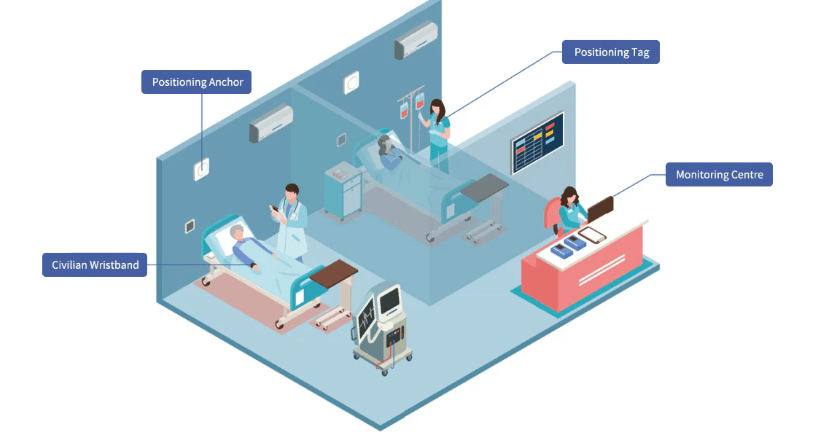
    To use an indoor position tracking system, the area needs to be covered with UWB anchors for indoor purposes to create a local setupThe UWB system makes use of three or more than three wide-band readers that send a wide pulse over a huge spectrum in GHz. The chirps are then heard by the readers that come from the wide-band tags that have an exciter deployed in them capable of creating pulses that cause short and instantaneous bursts. Accordingly, the readers measure the reported time and send it back to the central server.  

    Infrared systems

    The IR system makes use of infrared rays or pulses to track the signals within a building premise. To read the IR tag pulses, the IR receivers are installed in every room which further reads the pulses and tracks the location of the object or individual.