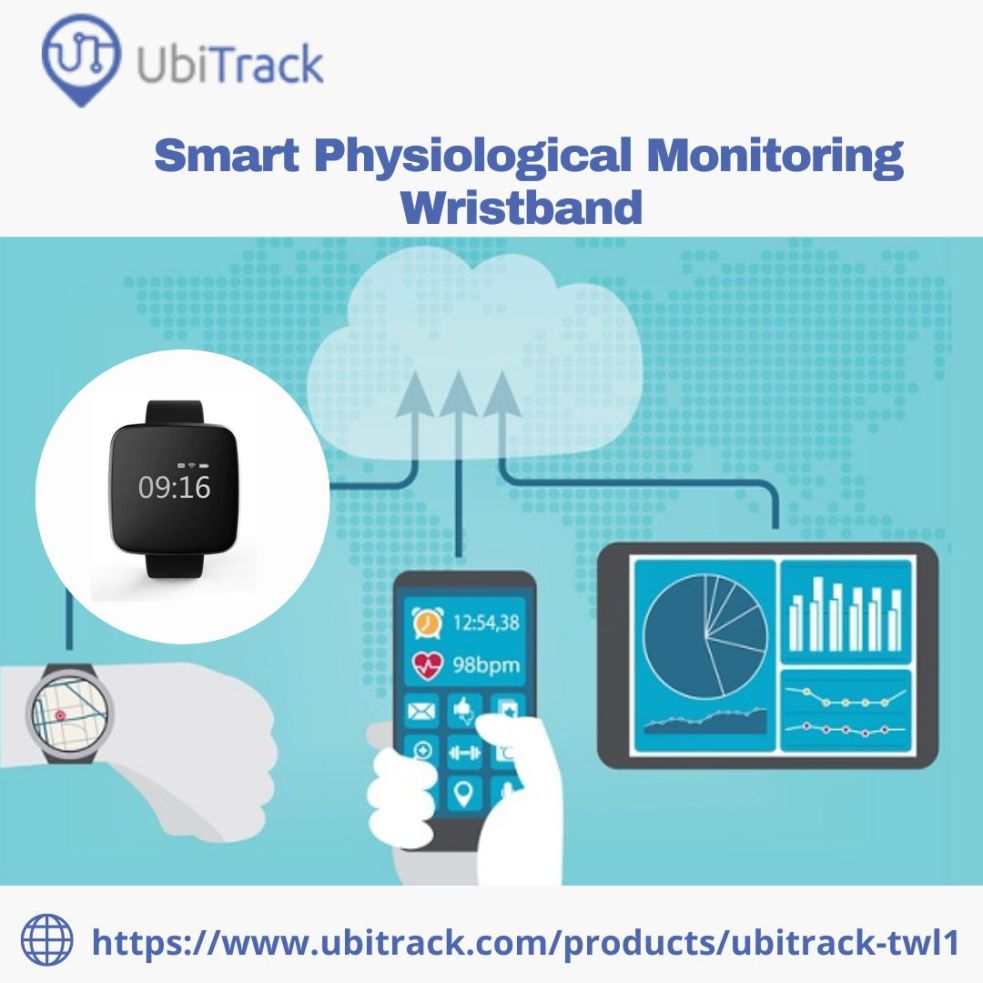
How Can Your Smart Watch Keep Your Heart Healthy?

Ever since their introduction, smartwatches have never stopped evolving. Earlier they were considered fashion accessories. But today, your smart watch can be the best friend of your health. From recording your sleep duration to tracking the number of steps you take daily; smartwatches can perform a range of functions. You can also wear a Heart Rate Monitoring Smart Watch and keep heart ailments like strokes at bay.

Heart rate monitoring with the help of smartwatches has become a common practice these days. The purpose of this technology is to help people monitor their heart health so that several cardiovascular diseases can be prevented. Modern Heart Rate Monitor Wristband comes with a wide range of heart-rate tracking features. From monitoring your heartbeat all day to alerting you whenever the heart rate spikes up unexpectedly, a smartwatch makes it easy for you to look after your heart. 

Wearable devices that have the heart rate calculating feature are used for promoting fitness and health. For instance, if you are working out at the gym, it will track your heart rate and get an accurate result. Even if many people have the misconception that these devices are meant for athletes, anyone can benefit from a heart rate measuring wearable. Just like RFID Positioning System tracks people and objects with the help of radio frequency, an IoT-based smartwatch is a kind of medical wearable that provides patients the information they require for achieving desired health outcomes. 

To Sum Up 

So, wearing a smartwatch that accurately captures your heartbeat makes sense. As it displays a person’s heart rate in real-time, it is possible to seek medical help and save a person’s life.  In addition, you can also be mindful of an ergonomic monitor position when you are at work to shield your body from several conditions like posture problems.

Out of POE, POE+ And POE++ Which One is the Best to Use?

Since the invention of power over Ethernet (POE) switches in 2003, technology has advanced significantly. In response to the expanding IoT market, the first generation 802.3af POE switch adapter was created, simplifying and lowering the cost of system design.

Work of POE Switches

A POE switch adapter has the ability to power devices across network wires since it has the Power over Ethernet feature built into it. This functionality enables it to transport speech, data, and electrical power across devices using a single Ethernet cable. Devices can still communicate with one another even when they are remote from a power supply. Because there is no need to run cables or create power outlets, using POE simplifies device installation while at the same time lowering expenses. The switches employ a safe, lower-than-mains voltage, but installation must be done carefully to protect equipment not made for POE from damage.

POE, POE+, and POE++

The amount of power delivered is the primary distinction between POE (IEEE 802.3af standard) and POE+ (802.3at). POE+ can deliver up to 30 watts over Cat5 cables with 25.5 watts available to devices, compared to POE’s 15.4 watts over the same medium.

A POE switch can handle maximum power usage of 15.4W per port at voltages between 44V and 57V. The connected PDs’ voltage, however, ranges from 37V to 57V.

  • Meters, such as those used to measure solar energy or inside temperatures, may typically be utilized with standard POE.
  • Simple VOIP phones that use the public internet.
  • Small Stock Positioning Monitor with wireless access points.
  • Security cameras that are fixed and do not pan, tilt, or zoom.
  • Switches for basic lighting systems, cameras, pool pumps, and small digital signs.
  • Loudspeakers and other powered step counter bracelets.