Stop Using Outdated Tech — UbiTrack’s Anchor Is the Future of Outdoor RTLS

In the world of real-time location systems (RTLS), precision and reliability are everything — especially when operating in rugged outdoor environments. Whether you’re managing assets on a construction site, tracking vehicles in a logistics yard, or monitoring personnel across a large industrial facility, your tracking technology needs to be accurate, durable, and smart enough to handle real-world challenges.

Yet, many organizations still rely on outdated systems like passive RFID, low-grade GPS, or short-range Wi-Fi that weren’t designed for high-stakes, outdoor positioning. These older solutions often struggle with signal interference, poor accuracy, and weather-related failures — leading to operational delays, safety risks, and lost visibility.

That’s why industries are turning to next-generation anchors that combine modern positioning technology with rugged design — and one of the standout solutions leading this shift is the Outdoor Anchor from UbiTrack.

Built for Harsh Environments

Designed for real-world conditions, this Outdoor Wall Anchor utilizes Ultra-Wideband (UWB) technology to deliver real-time, centimeter-level tracking accuracy. Unlike traditional GPS systems, which can lose signal in dense or obstructed areas, UWB Outdoor Positioning is far more resistant to interference and offers low-latency location data, even in tough environments.

With an IP65-rated enclosure, the anchor is sealed against dust, rain, and water jets, and operates reliably in temperatures ranging from -20°C to 60°C. Whether you’re working in extreme heat, bitter cold, or wet conditions, this Outdoor Positioning Wall Anchor keeps tracking without interruption.

Powerful Range, Simple Setup

Many outdated systems are difficult to scale or maintain. This anchor offers a wide operational range and supports Power over Ethernet (PoE) for simplified installation. Whether mounted on a pole, building, or structure, it delivers fast, stable performance without the need for complex wiring or frequent servicing.

When integrated into a full RTLS ecosystem, this Outdoor Wall Anchor provides instant, accurate tracking of assets, personnel, or vehicles — all visualized through intuitive dashboards. Live alerts and analytics help teams make smarter, faster decisions on the ground.

Scalable, Flexible, Future-Ready

From mining sites to smart factories and outdoor storage yards, this Outdoor Positioning Wall Anchor is scalable for both small zones and expansive areas. It supports a variety of tag types and is compatible with third-party systems, making it easy to integrate into existing infrastructure.

Choosing this technology means future-proofing your operations with reliable, modern tracking — and moving away from the inefficiencies of the past. As more industries adopt UWB Outdoor Positioning, the benefits of accuracy, reliability, and real-time insight become impossible to ignore.

Time to Upgrade

Outdated tech may seem familiar, but it comes at a cost: downtime, inaccuracy, and lost productivity. With industries rapidly evolving toward automation and data-driven decision-making, relying on legacy systems is no longer sustainable.

The Outdoor Anchor from UbiTrack represents a leap forward in outdoor positioning — combining advanced technology, industrial-grade durability, and flexible deployment. For organizations ready to modernize their tracking systems, this is the upgrade that delivers lasting value.
Track Anything, Anywhere Indoors — UbiTrack’s RTLS Tech Makes It Effortless

In today’s increasingly connected world, knowing the real-time location of your assets, equipment, and personnel inside complex facilities is no longer a luxury — it’s a necessity. Traditional GPS technology has long been the go-to for outdoor tracking, but when it comes to indoor spaces, it’s simply not enough.

This is where advanced Real-Time Location Systems (RTLS) come into play. They provide unparalleled accuracy in environments where GPS signals fail — such as warehouses, hospitals, factories, and commercial buildings. And leading the charge in this space is a smart, scalable solution that makes indoor tracking effortless: UbiTrack.

Why Traditional GPS Falls Short Indoors

While GPS is incredibly effective outdoors, the technology doesn’t translate well to enclosed spaces due to weak or blocked satellite signals. Businesses trying to apply a GPS Indoor Positioning System indoors quickly find themselves dealing with inaccurate data or complete signal loss. This can lead to asset misplacement, operational delays, and safety risks.

To solve these challenges, organizations are turning to the Indoor Navigation Positioning System, which uses local infrastructure like anchors, tags, and sensors to pinpoint locations within buildings — often with centimeter-level accuracy.

UbiTrack: Powerful, Precise, and Easy to Deploy

Unlike legacy systems that require complex installations or offer inconsistent performance, UbiTrack delivers a future-ready solution. Using a combination of Ultra-Wideband (UWB) and Indoor Positioning System Bluetooth technologies, the platform ensures real-time precision tracking in any indoor setting.

The system’s architecture is modular and scalable. Whether you’re monitoring a single floor or an entire industrial facility, UbiTrack adapts to your needs — without disrupting your operations.

Getting started is easy, too. With the Starter Kit For IPC Version, businesses can test the platform’s capabilities in a small, controlled environment before scaling up. This kit includes everything needed for a pilot project, offering a low-risk entry point into advanced indoor tracking.

Cross-Industry Applications That Drive Results

The demand for reliable indoor tracking is rapidly growing across multiple sectors. With an Indoor Navigation Positioning System, organizations can benefit from:

Logistics and Warehousing: Track pallets, forklifts, and goods with pinpoint accuracy

Healthcare: Monitor patients and medical devices to improve care and efficiency

Manufacturing: Ensure worker safety, track tools, and optimize workflows

Smart Buildings: Monitor foot traffic and space utilization in real time

In each of these use cases, RTLS technology doesn’t just track — it transforms. With better visibility comes smarter planning, improved safety, and increased operational efficiency.

Turn Data Into Action

Real-time location data is only valuable if it’s actionable. That’s why solutions like UbiTrack offer advanced dashboards that provide more than just dots on a map. Users can view heat maps, set up geofences, receive instant alerts, and generate detailed reports.

With innovations in Indoor Positioning System Bluetooth, users also benefit from low-power, wireless connectivity that doesn’t compromise accuracy — ideal for dynamic environments where assets and personnel are constantly moving.

For organizations evaluating the technology, the Starter Kit For IPC Version provides an ideal hands-on experience. It allows teams to see the ROI for themselves, before committing to a full deployment.

Even in challenging environments with signal interference or high device density, a well-designed GPS Indoor Positioning System integrated with local infrastructure ensures uninterrupted performance.

The Time for Indoor Visibility Is Now

If your organization is still relying on manual processes or outdated tracking methods, it’s time for a change. Indoor RTLS technology is no longer a futuristic concept — it’s a proven, powerful solution that leading industries are already using to their advantage.

With only four letters, UbiTrack represents a huge leap forward in indoor tracking. Whether you’re using Indoor Positioning System Bluetooth for mobile asset tracking or deploying a full-scale Indoor Navigation Positioning System, the technology is here — and it’s ready to work for you.

Advantages and Disadvantages of Ultra-Wideband Technology

Ultra-Wideband (UWB) is a wireless communication technology that operates over a wide frequency spectrum (typically greater than 500 MHz). Unlike conventional narrowband systems, UWB transmits information by sending short-duration pulses over a wide frequency range, which allows for high data rates and precise positioning capabilities. UWB has gained significant attention in recent years due to its applications in areas such as indoor positioning systems, secure keyless entry, health monitoring, and wireless communication. However, like any technology, UWB comes with both advantages and disadvantages.

Advantages of UWB

High Precision Location Tracking

One of the standout features of UWB is its ability to provide highly accurate location tracking, often within a few centimeters. This makes it ideal for indoor navigation, asset tracking, and smart home applications where precise positioning is crucial. Solutions like UbiTrack have leveraged UWB to offer real-time tracking systems in warehouses, factories, and healthcare environments.

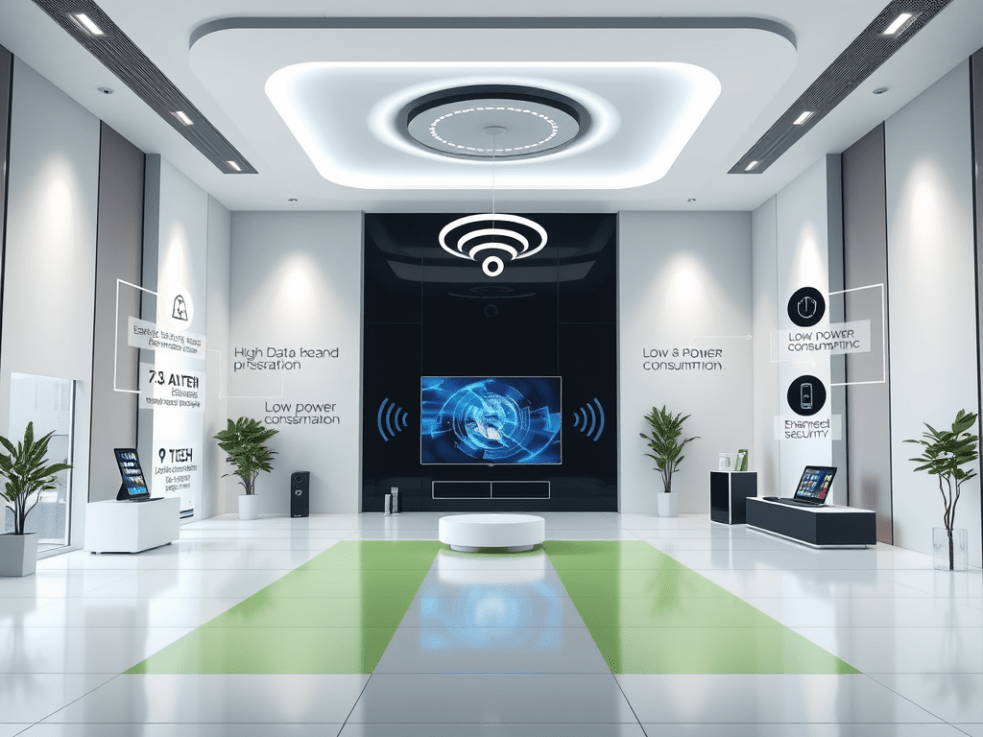
High Data Transfer Rates

UWB can transmit data at very high speeds over short distances. This is particularly useful for high-bandwidth applications such as streaming uncompressed video, wireless USB, and file transfers between devices.

Low Power Consumption

Despite its high data rate, UWB is known for its low power requirements, especially in comparison to other wireless technologies like Wi-Fi or Bluetooth. This makes it well-suited for battery-powered devices such as wearables and IoT sensors.

Resistance to Interference

Due to its wide frequency spectrum and low power spectral density, UWB is less susceptible to interference from other wireless technologies operating in the same environment. This results in more stable connections and improved performance in congested radio environments.

Enhanced Security

The short-range and pulse-based transmission of UWB signals make them more difficult to intercept or jam, offering enhanced security. This is why UWB is increasingly used in applications such as secure vehicle access and contactless payments.

Disadvantages of UWB

Short Range

While UWB excels in data speed and accuracy, its effective range is limited. It performs best over short distances (typically under 10 meters), which restricts its use in long-range communication scenarios.

Limited Adoption and Compatibility

UWB is not as widely adopted as other wireless technologies like Bluetooth or Wi-Fi. As a result, fewer consumer devices support UWB, which can limit its usefulness unless integrated into ecosystems by major manufacturers.

Higher Implementation Costs

The cost of implementing UWB technology, including specialized hardware and infrastructure, can be relatively high. This can be a barrier for small businesses or consumers looking for budget-friendly solutions.

Regulatory Challenges

UWB operates over a broad frequency spectrum that overlaps with other services, which can lead to regulatory restrictions in different countries. This variability can complicate international deployment.

Signal Attenuation and Obstruction

UWB signals can be significantly affected by physical barriers such as walls, metal, and water, which may reduce signal strength or accuracy in real-world environments.

Conclusion

UWB is a promising wireless communication technology with several significant advantages, particularly in precision tracking, high-speed data transmission, and low power consumption. However, its short range, limited adoption, and implementation costs pose challenges to its broader deployment. As UWB continues to be adopted in smart devices and automotive systems, platforms like UbiTrack demonstrate how the technology can be effectively used to create smart, efficient environments. With continued innovation and support from regulatory bodies, UWB has the potential to become a cornerstone of next-generation wireless systems.

The Value of Wi-Fi Positioning Systems in 2025

As technology continues to advance rapidly in 2025, businesses and developers have more options than ever when it comes to location-based services. With 5G, ultra-wideband (UWB), and advanced satellite systems like Galileo in play, it’s natural to wonder if Wi-Fi Positioning Systems (WPS) still have a place. The answer? Absolutely. Here’s why WPS remains a valuable solution in today’s landscape.

Ubiquitous Infrastructure with Minimal Cost

Wi-Fi networks are everywhere. Offices, malls, campuses, airports, hospitals, and homes all rely on Wi-Fi, making it an ideal foundation for positioning systems. Unlike GPS, which struggles indoors, or UWB, which requires specialized and expensive hardware, WPS leverages the existing infrastructure. This makes it incredibly cost-effective and simple to deploy at scale. Solutions like UbiTrack, which seamlessly integrate with existing Wi-Fi setups, highlight just how practical and efficient this approach can be.

Reliable Indoor Accuracy

In 2025, one of the strongest use cases for WPS is indoor positioning. GPS falters inside buildings, while WPS can deliver room-level accuracy without requiring users to carry extra devices or install special apps. Enhanced signal processing and machine learning models have improved accuracy significantly, allowing WPS to compete with newer, more expensive systems in indoor settings.

Part of a Powerful Hybrid Approach

Modern location services often rely on hybrid positioning systems that combine multiple technologies—GPS, Bluetooth, UWB, and Wi-Fi—for seamless transitions between indoor and outdoor environments. In this mix, Wi-Fi serves as the dependable middle layer, bridging coverage gaps and maintaining consistent tracking without driving up costs.

Stronger Privacy and Security Standards

As data privacy regulations have tightened, Wi-Fi positioning systems have evolved to meet them. Today’s systems incorporate user consent, encryption, and anonymization features, making them safe for use in sensitive areas like healthcare, education, and enterprise settings. This enhanced trust makes WPS not only practical but also compliant.

Diverse, Evolving Use Cases

Wi-Fi positioning continues to unlock new applications:

Smart buildings optimize HVAC and lighting based on occupancy data.

Retailers analyze customer movement to improve store layouts.

Museums and airports offer personalized, real-time navigation.

Emergency responders use WPS to locate individuals indoors during evacuations.

Leading platforms like UbiTrack are already enabling these innovations, offering scalable, plug-and-play Wi-Fi positioning solutions for industries of all sizes. 

Conclusion: Still Relevant, Still Smart

While newer technologies often steal the spotlight, Wi-Fi Positioning Systems remain a smart, reliable, and cost-effective choice in 2025. Especially in indoor and hybrid environments, WPS continues to offer tremendous value. Its adaptability and proven effectiveness ensure it’s not just still relevant—it’s often the best tool for the job.

Top Reasons Why Ultra-Wideband (UWB) is Ideal for Your Factory or Business

When it comes to adopting new technology no business wants to remain behind. They are giving preferences to the innovations and integrating them into their business. Sensing location information in indoor environments is a challenging task as it requires a high level of accuracy and precision. In the indoor environment, different objects reflect and disperse signals. One such latest IoT technology is UWB locations system which has shown better performance in indoor positioning. It has generated lots of excitement due to the level of location precision offered by the UWB positioning system. This positioning system can pinpoint location in real-time.

Here are some of the reasons mentioned why you need UWB positioning system for your business:

High-level of accuracy

One of the great benefits of UWB positioning is its accuracy. The high-bandwidth and low-frequency signal can pass through a variety of obstacles. The UWB positioning system is much accurate than Wi-Fi and Bluetooth. The accuracy of 30 centimeters can be achieved and thus it is quite beneficial for the factories to position moving objects. In plants, the accurate solution is crucial as weaker accuracy produces an erroneous picture. 

Less power consumption and Scalability

Location tags used by UWB indoor positioning system can work for a long duration due to low power usage. Without recharge, a location tag can collect data for two years. Hence, it reduces the maintenance costs for indoor positioning. A UWB-based indoor positioning system can track many tags in one facility. Thus, it is quite suitable for every size of the industry. The growing business that uses UWB system helps them to include more assets and cover a large area without re-installation. 

Deployment time is less

Installing the infrastructure for a UWB based system does not require much time. Also, it does not hamper the ongoing activities and there is no need to pause operations. Hence, the business can integrate this modern technology within a few hours. There are many renowned companies available in the marketplace that offer a UWB-based location tracking system for every size of business.

Minimum radio interference

As compared to phones and other equipment that generates radio signals, UWB has less power and spreads evenly over a wide range of the spectrum. Thus, it is suitable to be used in hospitals, production facilities, and other multi-room spaces.

UbiTrack is a world-popular brand that manufactures and supplies indoor positioning solutions with high accuracy, flexibility, and low cost. Accurate Heart Rate Monitor Watch is one of its most-popular products which is affordable and has lots of features.