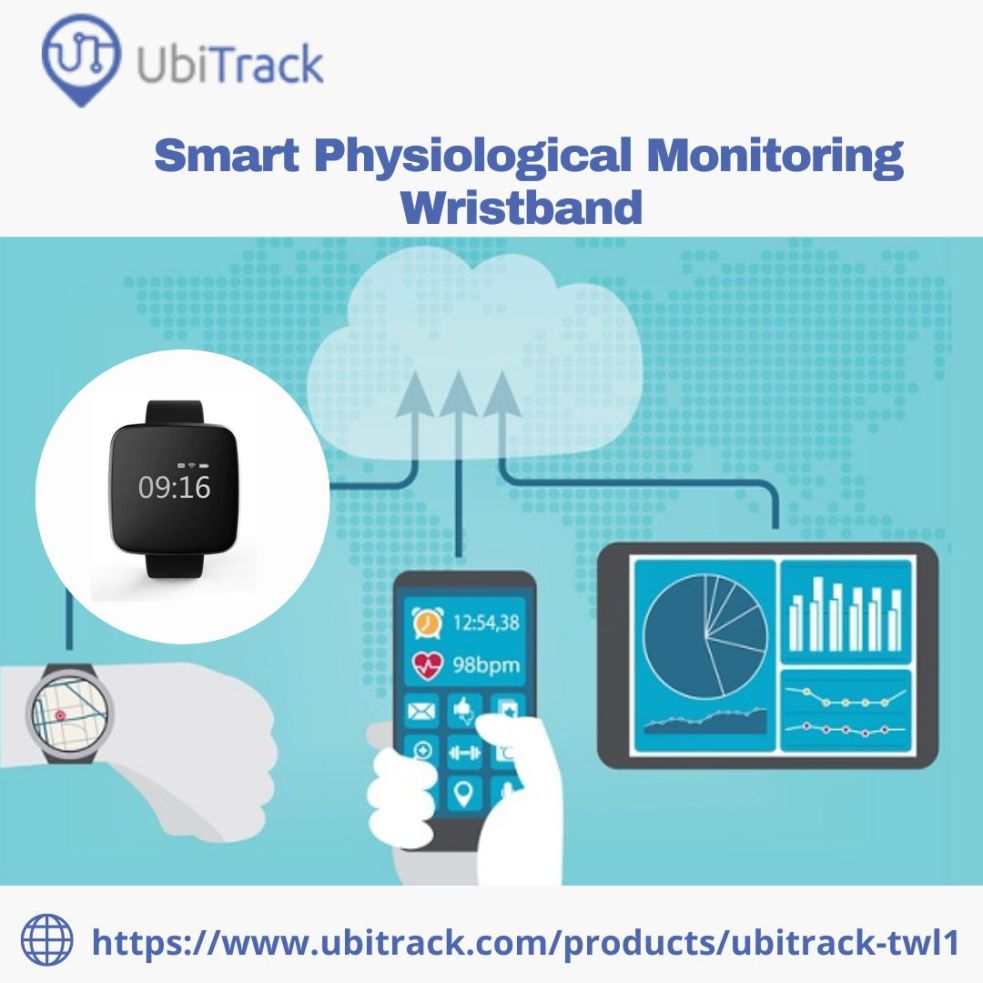
How Can Your Smart Watch Keep Your Heart Healthy?

Ever since their introduction, smartwatches have never stopped evolving. Earlier they were considered fashion accessories. But today, your smart watch can be the best friend of your health. From recording your sleep duration to tracking the number of steps you take daily; smartwatches can perform a range of functions. You can also wear a Heart Rate Monitoring Smart Watch and keep heart ailments like strokes at bay.

Heart rate monitoring with the help of smartwatches has become a common practice these days. The purpose of this technology is to help people monitor their heart health so that several cardiovascular diseases can be prevented. Modern Heart Rate Monitor Wristband comes with a wide range of heart-rate tracking features. From monitoring your heartbeat all day to alerting you whenever the heart rate spikes up unexpectedly, a smartwatch makes it easy for you to look after your heart. 

Wearable devices that have the heart rate calculating feature are used for promoting fitness and health. For instance, if you are working out at the gym, it will track your heart rate and get an accurate result. Even if many people have the misconception that these devices are meant for athletes, anyone can benefit from a heart rate measuring wearable. Just like RFID Positioning System tracks people and objects with the help of radio frequency, an IoT-based smartwatch is a kind of medical wearable that provides patients the information they require for achieving desired health outcomes. 

To Sum Up 

So, wearing a smartwatch that accurately captures your heartbeat makes sense. As it displays a person’s heart rate in real-time, it is possible to seek medical help and save a person’s life.  In addition, you can also be mindful of an ergonomic monitor position when you are at work to shield your body from several conditions like posture problems.

How Positioning System Analytics Helps Your Business?

The technique of detecting the location of people or assets in an interior environment using wireless sensors is known as indoor positioning. Typically, the idea also relates to analyzing the location of the data in order to benefit the identified individual or business. Indoor positioning may be accomplished using a number of management and wireless technologies like Wireless Indoor Positioning, RFID Positioning System and so on. In recent years, IPS has gained traction as a security solution in a variety of industries, including healthcare, energy, and education sector.

What are the most popular indoor positioning technologies?

Each of the several wireless technologies used in IPS today has advantages and disadvantages. The following are some of the most popular indoor positioning technologies today:

· Radio Frequency Identification (RFID)

RFID is one of the most well-known IPS standards. RFID may be utilized for RFID Positioning System in both active and passive modes. Active transmitters are battery-powered and can track your whereabouts in real time at a distance. Passive transmitters are completely powerless. When they’re close enough, they’ll bounce a signal back to receivers.

· Wi-Fi

The wireless indoor positioning system operates by specifying coordinates with Wi-Fi access points capable of transmitting certain data. Using the multilateration technique and the RSSI (received signal strength indicator) and MAC-address, the system may pinpoint the exact position of the user’s device. The precision of Wi-Fi locating is determined by the number of access points, the building’s layout, and the type of smart phone used.

· Ultra-wideband(UWB)

Indoor location tracking is quite accurate with UWB. Tracking devices use tags throughout their coverage area to bounce a high-frequency radio signal. Signals flow through building materials with centimeter-level precision and return to the beacons. That accuracy, though, comes at a cost. Ultra-wideband wireless systems are costly and consume a lot of power. This standard is appropriate for high-risk applications where additional tracking expenses are acceptable.

How Positioning System Analytics helps your business?

Business managers may receive analytical data about their organizations from the indoor positioning technology platforms. This includes extensive information on clients, their interactions and their points of interest. You may obtain a deeper grasp of what your clients want and use this information to your advantage.

Some of the key benefits are-

· Incorporating indoor navigation in retail outlets and shopping malls may benefit both businesses and customers. Using this approach, businesses may direct clients directly to the things they need. You may even use geo-location within a mall to tell customers about a promotion or deal when they are nearby.

· Significant factories currently require a large number of workers and supervisors to keep things operating properly. With the introduction of real-time monitoring software, these firms will be able to follow the movement of all their employees and assets, making the entire process faster and smoother.

If you are looking for efficient Wireless Indoor Positioning systems for your business you can reach out to UbiTrack’s Wireless Indoor Positioning, VM Hardware Version and RFID Positioning System solutions. UbiTrack is a multi-dimensional indoor positioning system with excellent accuracy and versatility. Real-time location, tracking replay, high-speed camera connection, precise facial recognition, electronic fence alarm, and other features are available through the system.

Why You Should Consider GPS Indoor Positioning System ?

We all know about the Global Positioning System GPS which can determine the precise location of an object or a person based on the satellite signal. But due to the limitation of GPS not working indoor, GPS Indoor Positioning systems have come into existence. Indoor Positioning systems are used to locate a person or an object inside a facility. The location information is sent to some application software to make the information useful. 

There are many different technologies that can be used for Indoor Positioning systems: 

· Proximity-based systems

· Ultra Wide-band systems

· WiFi-based systems

· Acoustic systems

· Infrared systems 

The IPS systems have lots of advantages and what it offers to you:

By navigating the desired location, IPS saves your time and effort regardless of the specific application. Therefore, Indoor Navigation Systems are used at airports and railway stations. It is also used in hospitals by the doctors and patients both. During emergencies, doctors can easily find the ward of the patient and can reach them. Also, if the patients are not able to find the ward, then by using IPS, it is easier for them to find the desired location. IPS systems are also used in large shopping malls, sports stadiums, and multifunctional arenas. 

It is tiring to find a particular shop or desired point in the large shopping malls, but IPS helps in finding the area of interest. Hence, it becomes easy for the visitor to go to the particular location in minimum time. 

UbiTrack is an integrated multi-dimensional indoor positioning solution featuring high accuracy, flexibility, and low cost. They are offering high-quality Step Counter Wristband, WiFi Positioning Badge, and many other positioning solutions. The devices are equipped with lots of technical features and functionalities which have numerous benefits for daily purposes.

A Complete Guide On Next-Generation AI-Enable Products

Artificial intelligence or AI has become one of the supreme parts of the modern technological, industrial revolution. The modern-day AI products like wireless indoor positioning system, RFID positioning system, and VM hardware version are offering their best help to the businesses all across the planet. Moreover, Artificial intelligence products also help to reduce the stress of manpower in the industries. Let us discuss the above-mentioned technologies in detail in this blog.  

1. Wireless indoor positioning system

The wireless indoor positioning system or a simple IPS can play a crucial role in large indoor environments like malls, amusement parks, and complex buildings. The indoor positioning system works on various technologies, including the daily-life Bluetooth to help visitors in guiding them to their desired destination. The range of the indoor positioning system also varies and are proportional to the size of the indoor environment.

2. RFID System

The RFID positioning system or radio-frequency detection system uses wireless powered tags along with an internal battery which receives and transmits radio signals within an enclosed space. Most of the RFID batteries are long-lasting and can work for several months on a single charge.

The powered tags send signals similar to the working of a cell phone; therefore, they can work accurately within the one-kilometre radius. They are more accurate than the RTLS system as it offers only a range of 3 meters. 

3. VM hardware version

The VM hardware version of the virtual machine hardware version describes the features of the virtual hardware supported by the Virtual machine. One can also select either a default or an earlier version of the VM hardware with the help of the VM hardware version. In simple words, the hardware version is used to decode the type of hardware which supports the software. 

The Ultimate Guide To Latest Smart Technologies In Day-To-Day Activities

The new smart technologies like smartwatches and drones help in minimizing stress, saving time, and cost. Smart technologies work hand in hand with artificial intelligence for bringing digital solutions to contemporary problems. The only aim of the smart AI technologies is to ease our lives. We will be discussing the latest technologies and ergonomic monitor position in this article. 

What are the RFID positioning system and its applications?

RFID positioning system, also known as Radio-Frequency identification system, uses radio frequency waves to transmit data with RFID tags’ help. The RFID tags use automated technology for identifying unique assets and inventory inside an industry. RFID technology utilizes auto-ID technology, which takes the tags to the next level without interfering with the line of sight. The RFID technology range depends on the type of RFID used as it can lie somewhere around a few centimeters to meters. 

Some of the common RFID technology applications include race timings, the textile industry, animal tracking in farms, and marketing campaigns of the brand. 

Smart-heart rate monitoring watch and ergonomic monitor positioning

The heart rate monitoring smartwatch is one of the most creative and innovative solutions helping entrepreneurs in saving a lot of time. Many people use the heart rate monitoring smart watch during workouts as they help them by providing accurate details of heart rate, running steps, and providing certain essential notifications by connecting them with Android or iOS devices. 

Ergonomics has become one of the buzz-words around as most people with contemporary ideas love to buy products that come with ergonomic styles of designs. The same technology can be used for ergonomic monitor positions, which ensure that people working for long hours on desk provide less stress on their eyes and sit with erect posture contributing positively to their health.

Role of Wireless Indoor Positioning in Modern-Day Businesses

Real-time positioning has been very popular in recent times. When you considerthe security and positioning as the most important aspect with growing digitization of businesses then you need the best positioning systems.  The system that tracks an item or a person uses real-time positioning, high-speed camera linkage, and electronic face alarms and face recognition. The modern RFID positioning system is very easy deployable in any corner of your room or offices.

The multi-algorithm, multi-mode and centimetre level positioning system helps to accurately position an object. You can keep track of a person or a patient in the hospital. These systems are built to provide multi-algorithm hybrid processing, 3D multi-dimensional positioning, electronic fence track playback, video linkage and having an Open API or SDK for third party integration. The Wireless indoor positioning system tracks any tags giving statistics. It displays the device details, monitor video and alarm information. The full screen, zooming and display map rotation are an important part of the real-time display. The RFID positioning system helps with multi-speed by single and multiple tags at any time. It also helps in intelligent filtering without removal of the positioning data period. The electronic fence supports all shapes rectangle, polygon, circle and other. It comes with entry and exit warning.

It can help in data reports generated automatically. Similarly the other types of technology used in face recognition video, device management, abnormal data management and multi-level authority management. The 3D multi positioning system includes zero one two and three dimensions. The wireless environmental sensing products and smart building solutions provided by modern companies have changed the way of working

UbiTrack is a renowned manufacturer of RFID positioning system, wireless indoor positioning and VM Hardware version. They used to combine TWR and TDOA protocols with an innovative algorithm to achieve high position tracking. They have a variety of product from a starter kit to the health monitoring equipment giving a centimetre level accuracy.