Everything You Need to Know About PoE Motion Sensors and Switches

As the name suggests, a PoE Motion Sensor is a kind of light and motion sensor that is networked and powered by PoE. This standalone motion detector is cloud-connected. The dual motion sensor can respond to both light and motion and is configured for light threshold and motion sensitivity. One sensor can control several lights and many sensors can control one light. What are the perks of ordering a PoE sensor? Here’s all you need to know to determine whether it will be useful or not:

The Benefits of Investing in a PoE Cloud Motion Sensor 

Can be Configured Via Mobile Apps- Configuring PoE motion sensors is quite easy with the help of specialized apps that users download on their smartphones. Once you program the sensor that comes with a POE Switch Power Adapter, you can make the necessary changes in sensitivity settings and the timer to meet your unique requirements. 

Angle Adjustment- They have unique designs for ceiling and wall mount. You can adjust the head up and down at diverse angles. This feature offers you the ease of getting optimal angle adjustment for the best results.

Determine How the Sensor Will be Triggered- Many of these devices give users the autonomy to decide how the sensor will be triggered. So, you will be free to monitor whether the sensor will be triggered by light conditions or motion, or both. 

Multi-light Control- Gone are the days when one light or motion sensor could control one single light, the one attached to it. The advanced PoE light sensors these days can control various lights.

To Sum Up 

In conclusion, WiFi Indoor Positioning is of great use in many industries. The PoE motion sensors are even more powerful in enhancing the safety features of your home and office. 

What Are the Technologies Commonly Found in the Hospitality Sector?

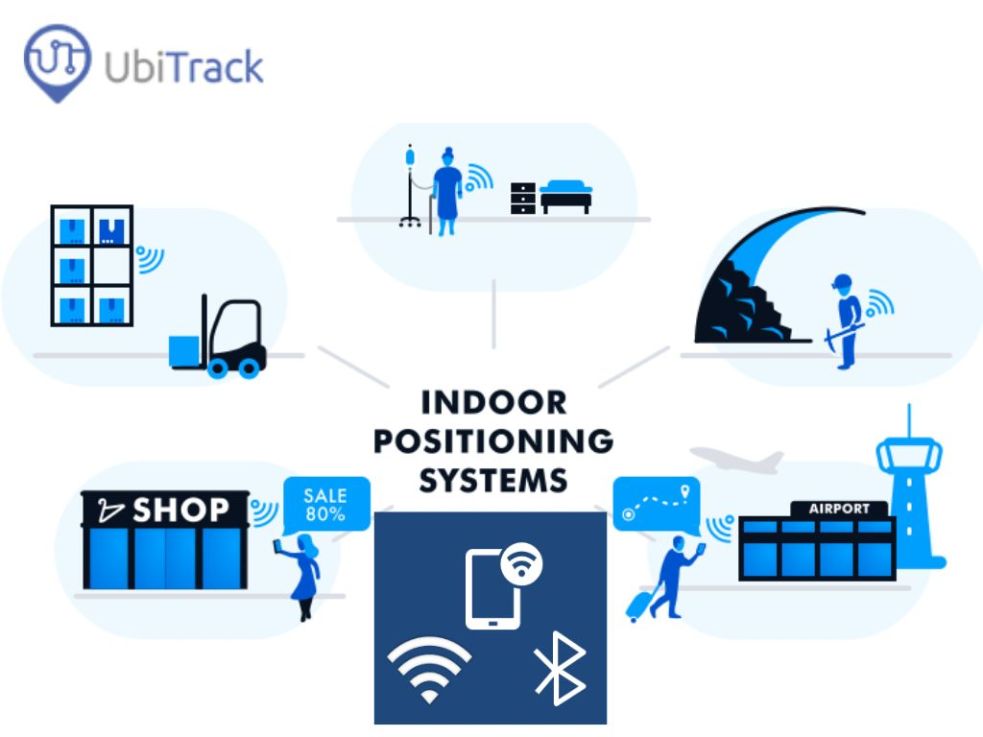
Indoor Positioning System has benefited many industries and the hospitality sector is one of them. As it is cost-effective and easy to install, many hotels around the globe have already started relying on it for asset tracking and other facilities. Here are some of the latest technologies that you will find in modern hotels: 

  • Automated Check-In- This is an advanced system that helps guests complete the check-in process smoothly. A fully automated check-in process is convenient for all. Guests can avoid standing in the queue at the hotel’s reception desk. They can simply collect the keys to their respective rooms from the self-service stations. Automated check-in is of great use in airports as well.
  • Smart Rooms– Smart rooms come with a variety of interesting features such as smart thermostats, digital water temperature valves and sensors, automated lighting, motorized shades and curtains, and digital food menus. 
  • Asset Tracking– Thanks to the Indoor Navigation Positioning System, asset tracking has never been easier. It can IoT-based hotel that is equipped with asset tracking technologies, and the service staff can track objects like cleaning carts and luggage racks. Thanks to real-time monitoring, hotels can now streamline housekeeping tasks. 
  • Smart Locks– Just like a Heart Rate Monitoring Smart Watch helps people monitor their heart rate, smart locks improve safety. Guests can simply use an app as their room keys. So, this replaces the need for a traditional key card. Integrated security devices can be connected together and programmed as per various protocols. For instance, if there is a security threat, the device will instantly trigger door locks, emergency lighting, and audio alerts. 

Wrapping Up 

In the coming years, many more IoT trends will emerge in the hospitality sector. IoT is growing at a fast pace, and it is opening novel paths for hotels.

Know Everything About Indoor Positioning with the Help of Ultra-Wideband

In industrial environments, indoor tracking often needs extremely precise localization. So, industries need solutions that are based on UWB, a short-range radio technology. Even if it doesn’t work with Bluetooth, Wi-Fi, and other consumer standards, UWB Outdoor Positioning and indoor positioning offer remarkable accuracy.

The Functionality of Indoor Positioning with Ultra-Wideband Technology 

Ultra-wideband is of great use in indoor positioning. As opposed to Wi-Fi and Bluetooth Low Energy, positioning in UWB is done mainly with transit time technique instead of measuring signal strengths. This method is capable of measuring the running time light takes to reach from one object to several servers. So, multiple receivers are required for the exact localization of any item. In addition, the line of sight between the transmitter and the receiver must be direct.

UWB, as a wireless positioning system technology, is ideal for both server-based positioning and client-based positioning. While indoor navigation is a type of client-based positioning, asset tracking is an instance of server-based positioning. The basic difference between client-based and server-based positioning is that the former enables the determination of the position on a mobile phone. In infrastructure-based positioning, the calculation of positions is reflected on a server.

· Server-based Localization

Ultra-wideband can easily track an object that is fixed in its place. BLE positioning or any other sensor technology can detect the movement phases. This type of Physiological Monitoring Equipment is immensely useful in various industrial environments.

· Client-based Localization

Other than BLE (Bluetooth Low Energy), you can also use Ultra-wideband as a tool for client-based positioning on smart phones. It is known for its high-precision positioning along with low latency.

Wrapping Up

The bottom line is to remember that UWB can deliver fast and amazingly intact positioning. So, with this smart indoor navigation system, you can get ahead of your business rivals.

How Accurately UWB Positioning System Performs?

In recent years, technology has advanced to the point where it is now commonly found in homes. Using traditional Wi-fi connections in a home’s basement, garage, or other indoor location has become inefficient and unreliable. By switching to a UWB indoor positioning system, users can connect anywhere in their homes using faster speeds and enhanced connectivity. In this system, the base station sends a signal in a straight line from the access point to the client. This limits the speed and range of a Wi- fi signal. On the other hand, UWB uses a 3D frequency BSS (Backward Sweep System) based on user location. The user’s device communicates with a base station using an omnidirectional antenna that sends signals in all directions simultaneously. The signals then converge at the base station, making it easier for devices to connect and establish a stable connection. This limits the number of indoor locations that can benefit from a UWB system but makes indoor connectivity much more reliable and faster than traditional Wi- fi systems provide.

Subsystems of a UWB Positioning System Include:

User location-

To determine where a device is located, an onboard processor on each device uses triangulation methods to determine its position based on Wi- fi network signals from nearby access points. It helps in accurate heart rate monitor watch in several places.

Base Station Localization-

To find its nearest base station, each device periodically measures its distance from each base station and computes its position based on this data using triangulation methods again with help from nearby Wi- fi network signals. Next, it determines which base stations are closest to their current location by measuring their distance again using similar methods as above with help from its signal strengths against user location data provided by subsystem 1.

A  UWB indoor positioning system can improve indoor connectivity by overcoming the limitations of traditional Wi-Fi systems such as speed and range indoors. It also reduces interference caused by multiple devices connecting at once at outdoor locations such as cafes and public spaces. As such, this technology will continue to become more popular as outdoor limitations increase due to the increased use of electronic devices.

A Complete Guide On Next-Generation AI-Enable Products

Artificial intelligence or AI has become one of the supreme parts of the modern technological, industrial revolution. The modern-day AI products like wireless indoor positioning system, RFID positioning system, and VM hardware version are offering their best help to the businesses all across the planet. Moreover, Artificial intelligence products also help to reduce the stress of manpower in the industries. Let us discuss the above-mentioned technologies in detail in this blog.  

1. Wireless indoor positioning system

The wireless indoor positioning system or a simple IPS can play a crucial role in large indoor environments like malls, amusement parks, and complex buildings. The indoor positioning system works on various technologies, including the daily-life Bluetooth to help visitors in guiding them to their desired destination. The range of the indoor positioning system also varies and are proportional to the size of the indoor environment.

2. RFID System

The RFID positioning system or radio-frequency detection system uses wireless powered tags along with an internal battery which receives and transmits radio signals within an enclosed space. Most of the RFID batteries are long-lasting and can work for several months on a single charge.

The powered tags send signals similar to the working of a cell phone; therefore, they can work accurately within the one-kilometre radius. They are more accurate than the RTLS system as it offers only a range of 3 meters. 

3. VM hardware version

The VM hardware version of the virtual machine hardware version describes the features of the virtual hardware supported by the Virtual machine. One can also select either a default or an earlier version of the VM hardware with the help of the VM hardware version. In simple words, the hardware version is used to decode the type of hardware which supports the software.