Indoor Positioning Systems and the Industries They Benefit –

Indoor positioning systems are made up of a network of linked devices that work together to provide location tracking services for people and assets that cannot be tracked using traditional technologies like GPS or satellite. GPS and satellite systems for Indoor Navigation Positioning systems are constrained by a lack of precision and/or the capacity of their signals to reach their intended location. Businesses will turn to indoor positioning systems to acquire functional insights about the movement of people and equipment within the workplace when GPS and satellite positioning systems fail or do not give precise enough data.

What Industries Can Benefit from Indoor Positioning Systems?

Many sectors use indoor positioning systems to improve the efficiency of tracking assets, employees, forklifts, maintenance, processes, and yard management, while also enhancing safety related to lone workers, roll-call, pandemic workplace practices, and forklift operations.

· Manufacturing

Location tracking systems are used in production contexts to promote occupational safety and optimize the use of equipment and employees.

· Healthcare

Indoor positioning systems and heart rate monitoring smartwatches are used in the healthcare business to secure assets and offer continuous patient medical status. 

· Construction

Indoor positioning systems perform admirably on both underground and above-ground building sites. They can be used to generate detailed information on asset usage and mobility on the job site during working hours.

· Mining

The mining, oil, and gas industries must adhere to stringent safety laws while still meeting industrial standards. Indoor positioning systems enable managers in various businesses to acquire significant insight about their equipment and people based on location data by monitoring the flow of goods, cycle times, travels, and other vital statistics.

Indoor positioning systems and indoor location monitoring are accomplished using a variety of ways, each of which varies in efficiency and cost based on the location tracking requirements. UbiTrack, thankfully, is making very accurate indoor location monitoring more practical and economical, particularly for ultra wide-band (UWB) systems.
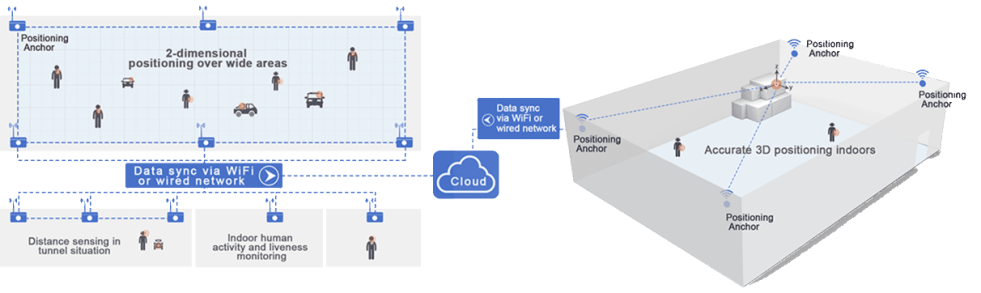
Indoor Location Tracking is Now Easy With Positioning System

UbiTrack has wireless indoor positioning equipment that tracks your location with one simple device. The new way to use sensors and the internet to create a personal map of the places you’ve been. And it’s easy for anyone to do. It is a high-performance, wireless indoor positioning solution. It enables accurate and anonymous indoor positioning of people and objects within buildings or even between buildings. This allows you to track movement in challenging environments like offices and hospitals or tag visitors for targeted advertising. The system is intended for building owners, architects, engineers, and designers looking to deliver a presence through the use of computerized interactive displays in public spaces.

How is it User-friendly?

We are the world’s most advanced and innovative wearable physiological monitoring equipment. Utilizing new technologies and medical-grade hardware, enables users to track their pulse, heart rate, respiratory rate, perspiration rate, body temperature, core body temperature, and more. It combines the latest in technology with user-friendly design, resulting in a simple and intuitive product.

The wearable physiological monitoring equipment connects to the smartphone, tablet, or PC via an app. The equipment can be utilized for a variety of health and life-tracking applications.

Highly Accurate: 

UWB Outdoor Positioning System delivers the perfect solution for customers seeking highly accurate, fast, and accurate positioning in the outdoor setting. The UWB Outdoor Positioning System is a solution to track assets and supervise workers during field operations. It is a powerful tool for location and tracking of assets as well as monitoring zone boundaries. 

UWB Outdoor Positioning system is a unique, high-power, broadband location system that is accurate to 5 cm or better (accuracy can be better). UbiTrack allows GNSS users to replace intrusive cables with a robust and dependable passive solution such as an antenna. The system consists of 3 units: the base station, an additional receiver, and a power amplifier that connects to the antenna itself.

All About Real-Time Location Solutions (RTLS) That You Need to Know –

What exactly is a Real-Time Location System (RTLS)?

Real-time location systems (RTLS) allow you to digitally track the location and movement of physical objects in big indoor facilities. As a type of indoor positioning system, RTLS primarily uses radio-frequency (RF) technologies such as UWB, BLE, and Chirp, as well as wireless devices such as tracking tags and smart phones, in conjunction with other integrated components, to continuously determine the position of people and objects in areas where GPS cannot reach. This provides actionable location data that may be utilized to display critical individuals, assets, vital equipment, and more on a live, indoor map or linked into automated processes and systems such as IoT-enabled safety apps, asset & supply chain management solutions, and more.

RLTS Variations-

There are mainly two types of RTLS that are used:

· RTLS with high precision

The position of the monitored object or person is identified to the specific place. This necessitates more sensitive gear, which is also more expensive. This is useful in use situations such as inventory management.

· RTLS based on proximity

The position of the monitored object or person is tracked to the accuracy of a few square feet or inside a zone of this kind. These technologies have the advantage of being less expensive to install.

How Reliable Are Real-Time Positioning Systems?

The accuracy of real-time location systems varies significantly depending on the underlying RF technology and positioning algorithms used by each system. A standard like UWB may give high location accuracy between 10-50 cm using time-of-arrival-based position estimates for applications that demand a high degree of precision.

If you are looking for RTLS Solutions, Bluetooth Indoor Positioning, Indoor Positioning Sensor or any other kind of indoor positioning and tracking systems, reach out to UbiTrack. UbiTrack is a multi-dimensional indoor locating system with excellent accuracy, versatility, and cheap cost. Real-time location, tracking replay, high-speed camera connection, precise facial recognition, electronic fence alarm, and other features are available through the system.

Application Of Indoor Positioning Systems In Various Sectors

Indoor positioning systems are greatly used nowadays with their application in a number of sectors. By using indoor positioning systems, any individual or object for that matter can be tracked down with respect to the surrounding environment. Nowadays indoor positioning systems are used in a number of sectors, which we will highlight now.

The most common applications of indoor positioning systems in various sectors-

  • Theme parks and resorts

Theme parks and resorts with large indoor spaces can be quite perplexing for guests, especially for first-time visitors. Guests may simply know everything about the location with the help of an Indoor Positioning System. This helps people organize their excursions in order to reduce stress and save time.

  • Shopping malls

There are several enormous retail malls with large internal spaces and extensive infrastructure all around the world. Location tracking technologies can help improve customer experience and space management.

  • Hospitals

Many hospitals have enormous interior spaces and complicated infrastructures. UWB Indoor Positioning System can make it easier to complete our critical tasks. Patients can find their way to the appropriate rooms for their visits. They can also see a map of the hospital and its current location on the app. Doctors and other medical workers can use the app to locate one another, which will help to reduce delays in crisis. 

  • Educational institutions

There are institutions all around the world with large campuses, and finding your way around can be complicated and stressful for new students. Indoor location tracking technologies can assist in providing students with a smart campus experience. They can quickly communicate their whereabouts to their colleagues and navigate their way to them. This will assist them in planning their day and avoiding missing classes.

  • Zoological parks

Visitors would require a guide to navigate around the zoo because it is usually huge and has several sections that visitors would like to explore. Visitors can use Indoor tracking technology to know where they are going and explore every sector without getting lost inside.

If you are looking to partner with a suitable indoor monitoring solution provider, reach out to Ubitrack. UbiTrack is a multi-dimensional indoor locating system with excellent accuracy, versatility, and low cost. Real-time positioning, tracking playback, high-speed camera connection, accurate facial recognition, electronic fence alarm, and other features are available through the system. In addition to indoor positioning sensors, they also provide Accurate Heart Rate Monitor Watches which prove to be very useful in the healthcare sector.

Which Indoor Placement Will Impact Our Everyday Working Lives

Indoor positioning is a system that can track the location of any marked object in real-time. Around the world, there is a growing demand for scalable, inexpensive, and simple-to-use indoor positioning systems like Indoor Navigation Positioning System, and so on.

Some practical instances of different indoor positioning applications and how they can help us in our daily lives-

· No more misplaced items

Have you ever misplaced an important item just before you needed it?

Materials and tools are discovered more quickly with automation and accurate location information. This results in more effective working time because no time is wasted in seeking the lost item. This means getting orders out the door faster and making more money. The correct technology may improve the pace at which tools are used.

· Optimizing material flow saves time and money

Everything is made easier by effective logistics. From managing inventory in retail to material flow management in the large-scale industry; UWB technology brings precision to a whole new level. Logistical efficiency reduces loading times and, as a result, the need to work overtime when things can be done faster. And, best of all, the efficiency of logistics allows for increased production without the need for additional production facilities.

· Indoor positioning technologies in healthcare are saving lives

Healthcare settings are great instances where the real-time positioning of people and equipment enhances safety and efficiency. The new technology can be used to manage critical care equipment and also to monitor treatment lengths and patient health improvement based on actual verified data. These positioning systems like Heart Rate Monitoring Smart Watch can give caregivers alerts of a potential emergency in real-time and help them determine the source and location.

· Increase sales by using targeted advertising

Indoor positioning allows for hyper-targeted advertising. This enables brands to reach customers in-store at the exact same moment and in the exact right place. When each message reaches customers when they are most receptive, the average purchase value rises. Smart shopping carts and targeted advertising have been shown to increase sales by up to 20% in retail outlets using indoor positioning systems.

If you are looking for smart indoor positioning solutions, reach out to UbiTrack. UbiTrack is a multi-dimensional indoor positioning solution with excellent accuracy and versatility. Real-time location, tracking replay, high-speed camera connection, precise facial recognition, electronic fence alarm, and other features are available through the tracking system.

How Internet of Medical Things Are Gaining Popularity In The Healthcare Sector

From standing in lines for a doctor’s call to just video calling doctors for advice, the healthcare sector has developed considerably. Today, the healthcare industry, in collaboration with technology, is enhancing patient care in a variety of ways by coming up with Smart Heart Rate Monitor Wristband, Heart Rate Variability Tracker, and so on. Healthcare IoT which is popularly known as the Internet of Medical Things (IoMT) has enabled remote patient care, enhanced clinic, and pharmaceutical operations, and increased data accuracy.

What Exactly Is IoMT?

The Internet of Medical Things (IoMT) is a conglomeration of software applications, medical equipment, Ergonomic Monitor Position systems, and services. It allows patients to upload medical data through the internet, which can help minimize hospital visits, resulting in a more patient-centric approach. As patient care has improved both in a distant locations and within facility walls, Internet of Medical Things developments have streamlined medical workflow management.

The Positive Impact of the Internet of Medical Things in the Healthcare Sector-

Appropriate decisions made that are based on data

IoT, with its data and network of interconnected internet of medical things devices, enables the development of frameworks capable of keeping up with the complexities of today’s modern medical procedures. Some well-known characteristics of this technology include the ability to monitor patients gradually in real-time and to remind patients to take their meds.

Better monitoring of patient’s health-

Internet of things devices makes it feasible to track medical conditions in ways that were impossible or difficult to do only a few years ago. Whether it’s delivering inventory or monitoring health issues, these gadgets can help achieve medical goals by offering a positive patient experience.

Some well-known examples include Smart Heart Rate Monitor Wristband, Heart Rate Variability Tracker, medicine trackers, and so on. The former can help with biometric verification, while the latter helps remind patients to take their medications.

Aids in seeking medical help from anywhere in the world-

Blood pressure, heart rate, oxygen and glucose levels, ECGs, and other crucial health data are collected and sent via smart medical equipment to doctors located in any part of the world. Doctors can utilize data from a device that has the application installed to deliver customized medical advice and aid patients regardless of their location.

So, these were some of the benefits of the Internet of Medical Things in the healthcare sector. Also, if you need health monitoring equipment for your hospital or for personal use, reach out to UbiTrack, for receiving the most effective and efficient positioning systems.

How Positioning System Analytics Helps Your Business?

The technique of detecting the location of people or assets in an interior environment using wireless sensors is known as indoor positioning. Typically, the idea also relates to analyzing the location of the data in order to benefit the identified individual or business. Indoor positioning may be accomplished using a number of management and wireless technologies like Wireless Indoor Positioning, RFID Positioning System and so on. In recent years, IPS has gained traction as a security solution in a variety of industries, including healthcare, energy, and education sector.

What are the most popular indoor positioning technologies?

Each of the several wireless technologies used in IPS today has advantages and disadvantages. The following are some of the most popular indoor positioning technologies today:

· Radio Frequency Identification (RFID)

RFID is one of the most well-known IPS standards. RFID may be utilized for RFID Positioning System in both active and passive modes. Active transmitters are battery-powered and can track your whereabouts in real time at a distance. Passive transmitters are completely powerless. When they’re close enough, they’ll bounce a signal back to receivers.

· Wi-Fi

The wireless indoor positioning system operates by specifying coordinates with Wi-Fi access points capable of transmitting certain data. Using the multilateration technique and the RSSI (received signal strength indicator) and MAC-address, the system may pinpoint the exact position of the user’s device. The precision of Wi-Fi locating is determined by the number of access points, the building’s layout, and the type of smart phone used.

· Ultra-wideband(UWB)

Indoor location tracking is quite accurate with UWB. Tracking devices use tags throughout their coverage area to bounce a high-frequency radio signal. Signals flow through building materials with centimeter-level precision and return to the beacons. That accuracy, though, comes at a cost. Ultra-wideband wireless systems are costly and consume a lot of power. This standard is appropriate for high-risk applications where additional tracking expenses are acceptable.

How Positioning System Analytics helps your business?

Business managers may receive analytical data about their organizations from the indoor positioning technology platforms. This includes extensive information on clients, their interactions and their points of interest. You may obtain a deeper grasp of what your clients want and use this information to your advantage.

Some of the key benefits are-

· Incorporating indoor navigation in retail outlets and shopping malls may benefit both businesses and customers. Using this approach, businesses may direct clients directly to the things they need. You may even use geo-location within a mall to tell customers about a promotion or deal when they are nearby.

· Significant factories currently require a large number of workers and supervisors to keep things operating properly. With the introduction of real-time monitoring software, these firms will be able to follow the movement of all their employees and assets, making the entire process faster and smoother.

If you are looking for efficient Wireless Indoor Positioning systems for your business you can reach out to UbiTrack’s Wireless Indoor Positioning, VM Hardware Version and RFID Positioning System solutions. UbiTrack is a multi-dimensional indoor positioning system with excellent accuracy and versatility. Real-time location, tracking replay, high-speed camera connection, precise facial recognition, electronic fence alarm, and other features are available through the system.

All About Indoor Positioning Systems That You Should Know

 Indoor positioning systems (IPS) or Indoor Position Tracking Systems are best described as GPS for indoor environments. It is a system that enables users to precisely locate the location of persons or assets within a building by using cell phones, mobile devices, tracking tags, or other devices.

There are several technologies that may be utilized for indoor positioning. We will be talking about the four types of Indoor Position Tracking Systems that are widely used.

1. Proximity-based Indoor positioning systems  Proximity-based systems can determine the general position of a person or object at the room level inside a facility. They use tags and sensors for indoor positioning and are either reader-based or reference point-based. Simple indoor localization may be accomplished at the lowest cost using proximity-based techniques. They are commonly used in sectors like healthcare, manufacturing, and a few other areas.

2. Trilateration based Indoor positioning systems – To establish the position of a receiver, trilateration positioning employs computed distances between numerous emitters (using radio waves) and a receiver. 

3. Fingerprinting based Indoor positioning systems – To estimate one’s position, fingerprinting positioning systems leverage signal measurements taken across buildings. It is predicated on the idea that at each position, a nearly unique signal may be collected. 

4. Motion positioning based Indoor positioning systems – Motion positioning operates on the same principles inside and outside buildings, utilizing different technologies that use smartphone sensors to detect and measure one’s motions.

How are Indoor Positioning Systems useful?  

Indoor positioning provides several advantages for a wide range of enterprises. By enabling an indoor positioning solution, businesses can quickly improve customer experiences, get data insights, and greatly boost productivity. Businesses may use a precise and comprehensive indoor positioning system to provide a variety of extra services such as indoor navigation, data analytics, asset tracking, and more. Healthcare institutions, airports, retail sites, workspaces, distribution hubs, and other significant corporations are currently employing UbiTrack’s indoor positioning systems across the world such as UbiTrack’s Indoor Positioning System BluetoothPositioning Wristband with Charging Cable, UWB Anchors for Indoor and so on.

All You Need To Know About Indoor Positioning Systems and Heart Rate Monitoring Smart Watch

Indoor positioning allows for quick and precise placement indoors. It encompasses a wide range of location technologies, including Bluetooth, Wi-Fi networks, sensors, and visual clues. This aids in the proper location of resources, transportation, and devices, irrespective of which level they are on.

Why do you need an Indoor Positioning System?

Indoor positioning systems allow you to find out where things or people are in a building. Because GPS is unreliable in inside environments due to the lack of visible contact with GPS satellites, an indoor positioning system relies on alternate means of the location. These include ubiquitous commercial protocols such as Wi-Fi and Bluetooth Low Energy, as well as Ultra-wideband and passive RFID alternatives. Both indoor and outdoor use is possible with the latest devices. The adoption of the positioning technique and expertise is the first and most essential stage in the deployment of locating systems.  

Features of Indoor Navigation Positioning System:

  • Immersive experience

To be able to find the structure, we must first generate a very precise map of it.

  • Using a self-service model

Based on the specified recommendations, you may install your devices however and wherever you like.

  • Working offline

Pinpoint devices and assets without a network connection and navigate to the correct location within a facility, whether it’s a parking place, a mall store, or a hotel room.

  • Make money with your data.

You can choose to publish your indoor map on the app’s Marketplace and give it to chosen third-party users.

All you need to know about Heart Rate Monitoring Smart Watch

heart monitor is a useful feature on many smartwatches. You may wish to monitor your heart rate on a regular basis for a variety of purposes; including increasing sports performance, stress management, and monitoring your heart health.

Features of a Good Heart Rate Monitoring Smart Watch includes:

  • Keep track of your maximum oxygen consumption.
  • Keep an eye on your running intensity.
  • Keep track of your swimming workouts.
  • Provide coaching advice
  • GPS tracking is available.

UbiTrack with excellent precision, flexibility, and cheap cost and has been delivering indoor monitoring, usage analysis, and sensor assessment solutions for people and assets.

Smart Monitoring Equipments – Advantages and Real-life Implementations

Wireless Indoor Positioning-

By utilising the (IoT) and pervasive connectivity, Wireless Indoor Positioning for establishing precise wireless indoor location information has become very crucial for satisfying increasing demands for location-based services. The indoor environment affects most Wi-Fi-based indoor location approaches that use wireless received signal strength (RSS)-based methodologies, which rely on signals from at least three reference access points.

The wireless indoor positioning system operates by utilising Wi-Fi access points that may transfer data to define coordinates. Using the multi alteration technique and the RSSI (received signal strength indicator) and MAC-address, the system may pinpoint the exact position of the user’s device. Wi-Fi positioning accuracy is determined by the number of access points, building topology, and kind of device is in use. Modern Android devices may be able to provide indoor positioning as accurate as 2 to 3 metres.

UWB Outdoor Positioning-

UWB Outdoor Positioning systems can pinpoint locations within 20 cm or less in real-time. Signals with a wide range of frequencies can be monitored properly in terms of the time it takes for an encoded signal to journey from a transmitter to a receiver because the capacity to precisely measure the “time of flight” of any radio wave is a function of bandwidth. The usage of a wide-frequency spectrum allows for a short transmission length. The signal is sent at a low power level with UWB, preventing interference with other radio systems such as cell phones and police radios.

Warehouse automation is one of the applications where the location accuracy of a UWB positioning system is clearly advantageous. Amazon has massive warehouses loaded with hundreds of thousands, if not millions, of different things; profitability rests on controlling labour expenses, which includes providing personnel with a mechanism to rapidly discover items when they are ordered by customers.

All of the different objects in a large warehouse may be simply mapped using UWB Outdoor Positioning systems. As items are scanned into stock by workers, scanners fitted with location tags communicate information about their location. The positions of things in three dimensions are recorded so that they can be quickly recovered to fulfil consumer orders.

IoT Based Physiological Monitoring Equipment

Internet of Things (IoT)-based physiological monitoring devices could be extremely valuable for patients during the present pandemic situation. This research provides an IoT-based system for real-time health monitoring that uses the patients’ observed body temperature, pulse rate, and oxygen saturation, which are the most crucial metrics for critical care. The observed temperature, heart rate, and oxygen saturation level are displayed on a liquid crystal display (LCD), which can be readily synchronised with a mobile application for rapid access. The suggested IoT-based technique was tested and verified on five human test participants using an Arduino Uno-based device.

The system’s results were promising: the data acquired from the system are saved relatively quickly. When compared to other commercially available devices, the system’s results were confirmed to be accurate. During the COVID-19 epidemic, IoT-based gadgets could be extremely useful in saving people’s lives. For more updates visit here – https://www.ubitrack.com/