Indoor Anchor: Accurate, Scalable Location Tracking for Every Industry

The Indoor Anchor is a crucial component of Ubitrack’s advanced real-time location tracking system, designed to help businesses efficiently monitor and manage assets and personnel in indoor environments. It plays a significant role in enabling precise indoor positioning with high accuracy and reliability.

Indoor Anchor

The Indoor Anchor is a network device that communicates with other elements of Ubitrack’s tracking system, such as tags or mobile devices, to determine and track their location within a building. It works in conjunction with the tracking platform, providing real-time data on the position of assets, equipment, and individuals. The anchor leverages Bluetooth Low Energy (BLE) technology, advanced algorithms, and other sensors to provide precise tracking in indoor spaces where GPS signals are unavailable. As an Indoor Positioning Sensor, it ensures high precision even in challenging environments. This technology also supports Wireless Indoor Positioning, making it easier to track assets without the need for wired systems.

Features

High-Precision Indoor Tracking: The Indoor Anchor enables centimeter-level accuracy for asset tracking, allowing businesses to pinpoint the location of resources in large and complex indoor spaces.

Scalable and Flexible: The system is designed to be scalable, making it suitable for a wide range of business environments. Whether in a small office or a sprawling industrial warehouse, the Indoor Anchor can be easily integrated and expanded to ensure full coverage.

Real-Time Monitoring: The Indoor Anchor constantly transmits location data to the tracking platform, delivering real-time insights on the position of all tracked entities. This ensures businesses always have up-to-date information on their assets and personnel.

Cost-Effective Solution: By utilizing BLE and other low-power technologies, the Indoor Anchor minimizes energy consumption, reducing operational costs compared to more power-hungry alternatives.

Easy Installation: Designed for simplicity, the Indoor Anchor is easy to install and configure. It can be strategically placed within a building to create a seamless tracking environment with minimal setup time.

Improved Efficiency: With access to detailed location data, businesses can optimize workflows, prevent asset misplacement, and enhance overall operational efficiency. This is particularly valuable in industries like healthcare, logistics, and manufacturing.

Industries Benefiting from the Indoor Anchor

The Indoor Anchor finds applications across a variety of industries such as healthcare, manufacturing, logistics, and retail. For example, in healthcare, it helps track medical equipment, ensuring devices are readily available when needed. In manufacturing, it allows companies to monitor equipment usage and maintenance, minimizing downtime and improving productivity.

Why Choose the Indoor Anchor?

The Indoor Anchor offers a reliable, scalable, and cost-efficient solution for real-time indoor location tracking. With its high accuracy, ease of integration, and ability to deliver real-time data, it significantly enhances operational efficiency across different industries. Whether it’s tracking assets, personnel, or equipment, the Indoor Anchor enables businesses to optimize their indoor environments and make more informed, data-driven decisions. UbiTrack’s solution empowers businesses to take full control over their indoor spaces, fostering smarter decision-making and improved productivity.
Know About the Different Types of Indoor Tracking and Positioning Technology!

Indoor positioning and tracking systems are highly effective technology that has a huge range of applications. They use the network in which receivers and transmitters work to provide a detailed picture of the movement of your assets and people in your facility. You can get real-time updates by using these devices. There are several kinds of positioning devices that you can get in the market. However, some people don’t know about the different options that you have in indoor positioning sensor so take a look.

Wifi-based systems!

These positioning and tracking systems use the same kind of system just like the wireless internet service. They work by tracking the ID number which is also known as the MAC address of every connected device. These devices have a range of around 150 meters which is more compared to most IPS systems. You can get all the updates through the internet without any issues from any place you want with RTLS Solutions.

Bluetooth system!

These kinds of positioning devices use short-range wireless technology. It is a commonly used technology that is used for pairing electronic devices like connecting headphones to smartphones. The Bluetooth positioning systems have a short range that is about 25 meters but it can be very accurate in 3 meters of range. The Warehouse Stock Monitoring Device is very useful in the areas where you already have Bluetooth-enabled assets.

Ultra-wideband IPS!

The non-removable tracking bracelet makes use of higher radio frequency compared to the wifi and Bluetooth devices. These positioning devices are best to use in the workplace which is crowded with materials that are disrupting the lower frequency such as thick walls and metal-related things. It is highly accurate and can easily locate the assets. The range of these devices is higher than the wifi and accurate too.

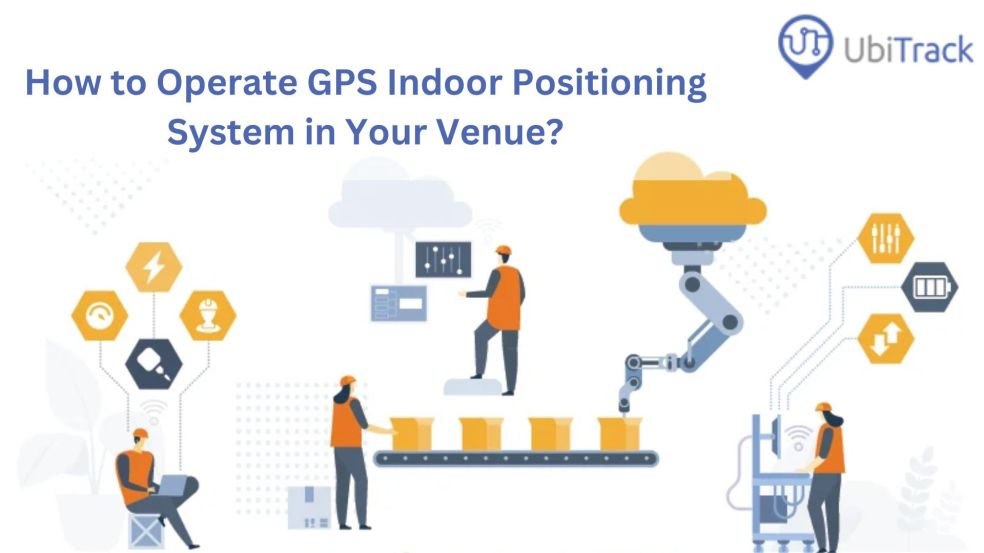
How to Operate GPS Indoor Positioning System in Your Venue?

Navigating large indoor venues can be a tricky business. But thanks to advancements in technology, GPS indoor positioning systems (IPS) have made it considerably easier. So, how can you operate one in your venue? Let’s dive right in!

GPS indoor positioning has evolved to be a game-changer in various industries, including retail, healthcare, and event management. They leverage existing infrastructure, such as WiFi, to provide accurate real-time indoor positioning.

The first step in implementing an indoor positioning system in your venue involves understanding your specific needs and objectives. Are you aiming to enhance customer experiences, improve operational efficiency, or ensure safety within your venue? Once you’ve identified your goals, you can select a suitable IPS system.

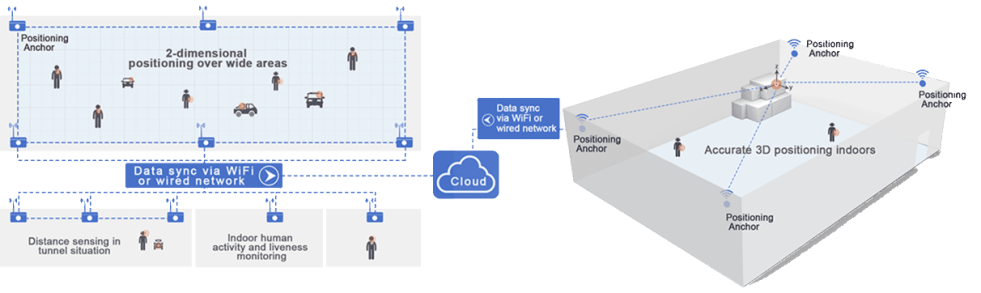
The second step is system deployment. This involves installing WiFi access points throughout your venue and setting up the system on a server. This infrastructure forms the backbone of your WiFi indoor positioning service.

Once your system is in place, the next step is to customise your IPS to suit your venue’s specific requirements. This includes defining areas of interest and setting up notifications and alerts related to these areas. With a solution like UbiTrack’s GPS Indoor Positioning System, you can also integrate other features, such as asset tracking and personnel management.

Finally, you need to ensure that your system is user-friendly and provides a seamless experience. This can be achieved by incorporating a simple, intuitive user interface and ensuring the system’s reliability and performance.

In conclusion, integrating an Indoor Positioning System into your venue can streamline operations, enhance visitor experiences, and improve safety measures. Get in touch with UbiTrack today to discover how our GPS indoor positioning sensors can transform your venue. Remember, the future of indoor navigation is here, and it’s time to embrace it!

Unified Positioning from Outside to Inside with UbiTrack

Using the GPS on your phone to pinpoint your precise location while moving around outside is simple. The GPS signals, however, are too faint to be useful indoors. Fortunately, the expert’s creative physiological monitoring equipment monitoring can be solved in several different ways. Users can monitor their pulse, heart rate, breathing rate, perspiration rate, body temperature, core body temperature, and other vital signs using cutting-edge technology and medical-grade hardware. It creates a straightforward, user-friendly product by fusing the newest technology with a user-friendly design.

The Benefits of Physiological Monitoring Equipment

An app is used to connect the physiological monitoring equipment to a PC, tablet, or smartphone. The tools can be used for a range of life and health tracking applications.

High Accuracy

Customers looking for extremely precise, quick, and accurate positioning in an outdoor environment will find the ideal solution in the UWB Outdoor Positioning System. The UWB Outdoor Positioning System is a tool for managing field personnel and tracking assets. It is an effective tool for monitoring zone boundaries as well as asset locating and tracking.

A distinctive, high-power, broadband positioning system with an accuracy of at least 5 cm is the UWB Outdoor Positioning System (accuracy can be better). With GNSS users may swap out unsightly wires for a reliable and durable passive option, like an antenna. The base station, an extra receiver, and a power amplifier that is connected to the antenna are the three components of the system.

Seamless Positioning from Outside to Inside.

UbiTrack offers a blue-dot experience with a seamless transition from outdoor to indoor navigation regardless of the positioning service you use. To make sure you’re walking the right way, the blue dot refreshes as you move along the path.

UWB Positioning System

A multi-dimensional integrated indoor positioning system with great precision, adaptability, and affordability are called UbiTrack.

The system provides access to features including accurate facial recognition, high-speed camera connection, real-time positioning, tracking playback, electronic fence alert, and more. There are only four stages involved in configuration and deployment. These include setting up the positioning tags, uploading the floor plan, deploying the positioning anchors, and configuring the software and wireless indoor positioning.

Smart Monitoring Equipments – Advantages and Real-life Implementations

Wireless Indoor Positioning-

By utilising the (IoT) and pervasive connectivity, Wireless Indoor Positioning for establishing precise wireless indoor location information has become very crucial for satisfying increasing demands for location-based services. The indoor environment affects most Wi-Fi-based indoor location approaches that use wireless received signal strength (RSS)-based methodologies, which rely on signals from at least three reference access points.

The wireless indoor positioning system operates by utilising Wi-Fi access points that may transfer data to define coordinates. Using the multi alteration technique and the RSSI (received signal strength indicator) and MAC-address, the system may pinpoint the exact position of the user’s device. Wi-Fi positioning accuracy is determined by the number of access points, building topology, and kind of device is in use. Modern Android devices may be able to provide indoor positioning as accurate as 2 to 3 metres.

UWB Outdoor Positioning-

UWB Outdoor Positioning systems can pinpoint locations within 20 cm or less in real-time. Signals with a wide range of frequencies can be monitored properly in terms of the time it takes for an encoded signal to journey from a transmitter to a receiver because the capacity to precisely measure the “time of flight” of any radio wave is a function of bandwidth. The usage of a wide-frequency spectrum allows for a short transmission length. The signal is sent at a low power level with UWB, preventing interference with other radio systems such as cell phones and police radios.

Warehouse automation is one of the applications where the location accuracy of a UWB positioning system is clearly advantageous. Amazon has massive warehouses loaded with hundreds of thousands, if not millions, of different things; profitability rests on controlling labour expenses, which includes providing personnel with a mechanism to rapidly discover items when they are ordered by customers.

All of the different objects in a large warehouse may be simply mapped using UWB Outdoor Positioning systems. As items are scanned into stock by workers, scanners fitted with location tags communicate information about their location. The positions of things in three dimensions are recorded so that they can be quickly recovered to fulfil consumer orders.

IoT Based Physiological Monitoring Equipment

Internet of Things (IoT)-based physiological monitoring devices could be extremely valuable for patients during the present pandemic situation. This research provides an IoT-based system for real-time health monitoring that uses the patients’ observed body temperature, pulse rate, and oxygen saturation, which are the most crucial metrics for critical care. The observed temperature, heart rate, and oxygen saturation level are displayed on a liquid crystal display (LCD), which can be readily synchronised with a mobile application for rapid access. The suggested IoT-based technique was tested and verified on five human test participants using an Arduino Uno-based device.

The system’s results were promising: the data acquired from the system are saved relatively quickly. When compared to other commercially available devices, the system’s results were confirmed to be accurate. During the COVID-19 epidemic, IoT-based gadgets could be extremely useful in saving people’s lives. For more updates visit here – https://www.ubitrack.com/